
Use Your Wearable to Test Your Own Habits: A Simple Wellness Experiment
Wearables can do more than show daily numbers: used thoughtfully, they let you test whether one change, such as a consistent bedtime or a daily walk, shifts patterns like sleep or resting heart rate over time. Make one change at a time, track it for a few weeks and remember that many factors affect wearable readings. This article explains how to create your own wellness experiment.
Par Root Health TürkiyePublié le Mis à jour le 3 min de lecture
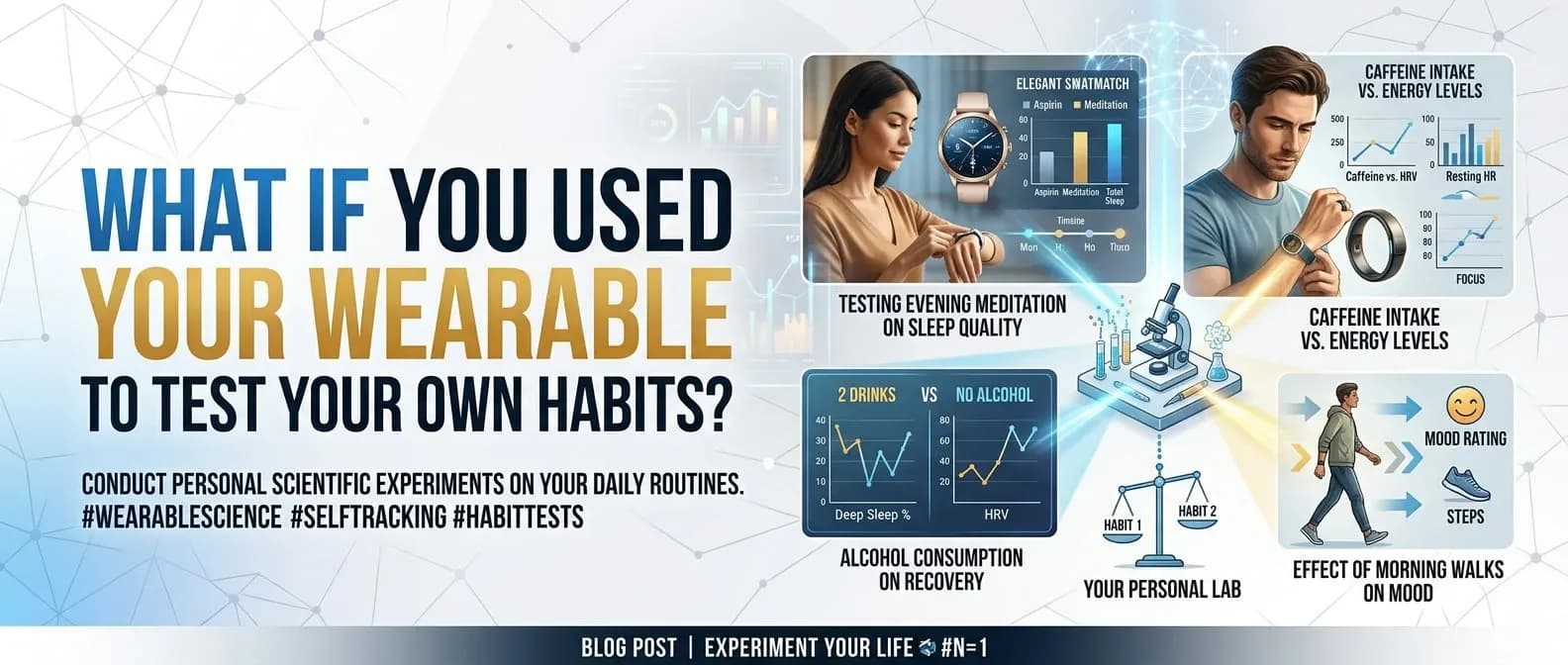
Wearables can do more than show daily numbers: used thoughtfully, they let you test whether one change, such as a consistent bedtime or a daily walk, shifts patterns like sleep or resting heart rate over time. Make one change at a time, track it for a few weeks and remember that many factors affect wearable readings. This article explains how to create your own wellness experiment.
Instead of simply checking your numbers every morning, what if you used those numbers to better understand how changes in your daily routine may affect you over time?
Start by paying attention to your normal patterns. How are you sleep ing? What does your resting heart rate typically look like? How consistent is your activity? How do you feel when you wake up? What does your energy feel like throughout the day?
Then make one intentional change.
For example, someone beginning a daily Clean Slate™ routine could continue wearing the same device and paying attention to their normal wellness trends. Clean Slate is designed to support the body's natural cleansing and elimination processes as part of a daily wellness routine.
Over the following weeks, don't look for one magical number. Look for patterns.
Are you sleeping differently? Is your activity changing? How do you feel in the morning? Do you feel more motivated to move? Are there changes in your normal recovery trends? Are you becoming more consistent with other healthy habits?
Your wearable cannot tell you that Clean Slate caused any of those changes. Sleep, nutrition, exercise, stress, hydration, illness, and many other factors can influence wearable measurements. But it can give you another way to observe your own patterns while you make intentional changes to your lifestyle.
And that's a much more interesting use of wearable technology.
Rather than asking your watch, “Am I healthy?”
Use it to help answer a better question:
“When I change the way I take care of my body, what changes with me?”
That turns wearable technology from something that simply scores your health into something that can help you become more curious about it.
Create Your Own Wellness Experiment
You can even keep it simple.
For a week or two, establish your normal baseline. Keep your routine relatively consistent and pay attention to sleep, activity, resting heart rate, recovery metrics, and—just as importantly—how you actually feel.
Then introduce your new wellness routine and continue observing those same areas.
Don't obsess over what happens tomorrow morning. Look at the bigger picture over several weeks.
The goal isn't to prove that one product, food, supplement, workout, or habit caused a particular number to change.
The goal is to become more aware of your body.
Because ultimately, wearable technology may be most valuable when it encourages us to do something technology has always struggled to do for us:
Pay attention.