Bienfaits du Mucuna Pruriens pour le corps féminin
Un article sur le Mucuna pruriens, aussi appelé pois mascate, et sur les acides aminés présents dans ses graines, dont la L-DOPA, présentés à titre d'information générale.
Par Root Health TürkiyePublié le Mis à jour le 6 min de lecture
Mucuna pruriens, better known as velvet bean, is a climbing legume whose seeds naturally contain L-DOPA, the molecule the body turns into dopamine. That link to dopamine is why scientists are investigating it in areas that matter to women, such as mood, stress and reproductive health. Most of the studies are small or done in animals, so the plant is best understood as an interesting subject of research rather than a remedy.
Velvet bean in a nutshell
The plant grows in tropical parts of India, Africa and South America. Its pods are covered in fine hairs that make skin itch, which is where the Latin name “pruriens” (itching) comes from. Traditional Ayurvedic practice has used the seeds for centuries; modern interest centres on one compound in particular, L-3,4-dihydroxyphenylalanine, or L-DOPA.
For most people in Europe, velvet bean is not something you would find at the greengrocer. You are far more likely to meet it on the ingredient panel of a herbal blend. Our velvet bean extract page covers it as an ingredient; this article looks at the bigger picture.
How L-DOPA and dopamine fit together
Dopamine is a messenger in the nervous system involved in movement, motivation and reward. Dopamine itself cannot pass from the blood into the brain, but L-DOPA can, and it is converted into dopamine once it gets there. Researchers point to this ability to cross the blood-brain barrier as the reason the plant attracts so much attention. In its synthetic form, levodopa, the same molecule is a prescription medicine for Parkinson's disease across the EU.
The Parkinson's angle
In Parkinson's disease, dopamine-producing cells in the brain gradually decline, which affects movement. Clinical research has examined how the natural L-DOPA in velvet bean behaves in this setting, and some trials have compared it with synthetic L-DOPA. Interesting as that work is, nobody with Parkinson's should change or supplement their medication without their neurologist: plant-derived L-DOPA is not a substitute for prescribed treatment.
Areas being studied in women
Velvet bean is not a “women's herb” as such. It appears in women's health research because dopamine, stress hormones and the reproductive axis are closely connected.
Mood and everyday stress
A review of the plant discusses its possible effects on dopamine, serotonin and noradrenaline and its relationship with psychological stress. Much of this comes from animal models and small groups of people. If you are dealing with low mood or anxiety, a GP or mental health professional is the right first step, and anyone taking antidepressants should not add an L-DOPA-containing product without medical advice.
Reproductive health: tradition versus evidence
Ayurveda has long associated velvet bean with reproductive vitality. Today researchers explore the idea through dopamine's role in keeping prolactin in check and through the plant's antioxidant compounds. What is missing are large, well-designed studies in women on fertility or cycle regularity. If you are trying to conceive, are pregnant or are breastfeeding, talk to your gynaecologist or midwife before using it.
Antioxidant compounds
Seed and leaf extracts contain polyphenols and related compounds, and laboratory work has measured their free-radical scavenging capacity. A result in a test tube does not tell us much about outcomes in the human body; vegetables, fruit, pulses and olive oil remain the everyday sources of antioxidants.
A curious side note: cobra venom
In parts of Nigeria, velvet bean seeds have traditionally been eaten as a precaution against snakebite. Scientists put this to the test in rodents and found that pre-treatment with seed extract had a protective effect against cobra venom. A further study reported less venom-induced damage to blood vessels in the heart and liver of rats. The effect was seen only with cobra venom, not with other species, and the real-world advice is unchanged: a snakebite needs emergency care.
Safety, amounts and who should be careful
The source article gives a suggested intake for Mucuna pruriens of 500-1000 mg a day. Because some people experience nausea, products can be taken with food. Rare cases of psychosis have been reported in people who ate unprepared seeds, a reminder that the raw bean is not a kitchen ingredient. Check with a doctor first if you:
- take medication for Parkinson's disease, depression, psychosis or blood pressure
- are pregnant, breastfeeding or planning a pregnancy
- have a psychiatric diagnosis or an upcoming operation
In the EU, food supplements are regulated as foods, so buying from a traceable seller with a proper label is a sensible baseline.
Where you will find velvet bean
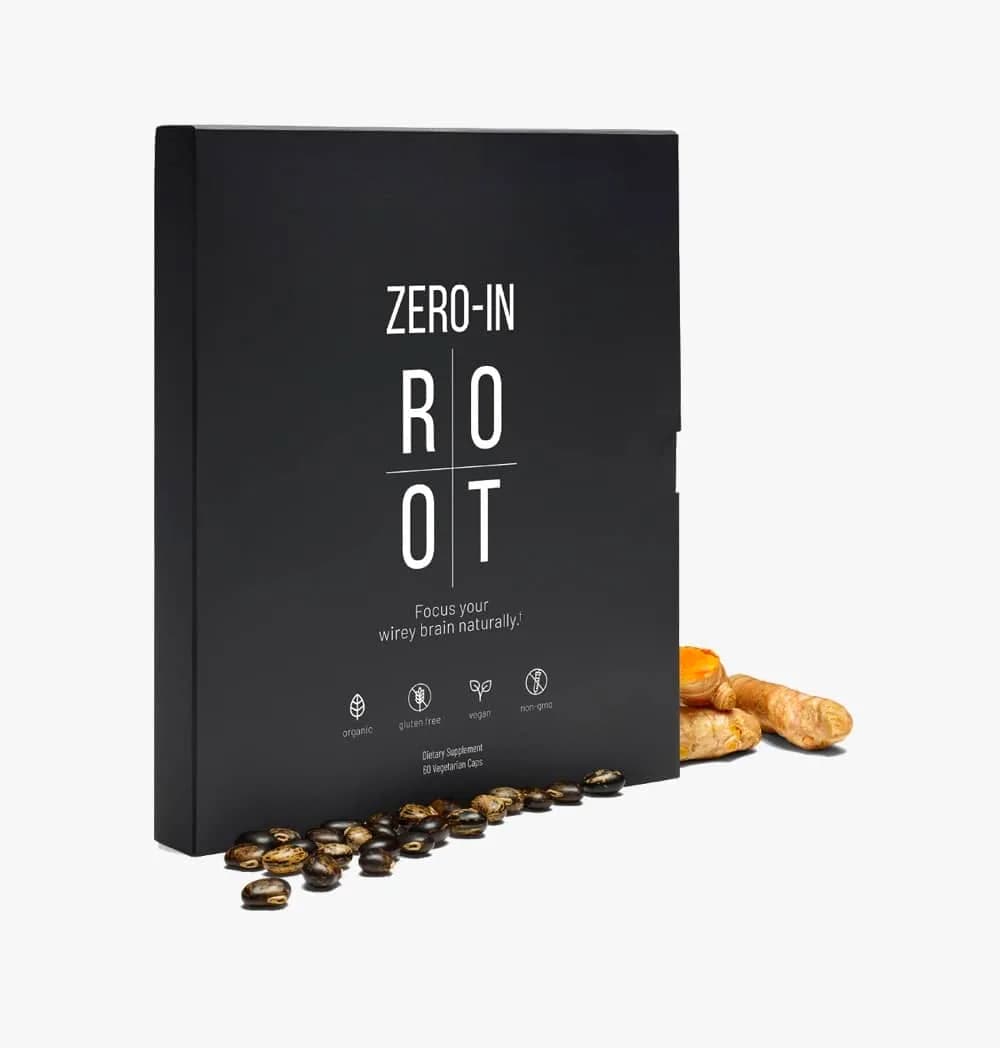
Velvet bean is sold on its own in capsules or as part of herbal formulas. ROOT's Zero-In capsule, according to ROOT's ingredient list, combines velvet bean extract with turmeric, pine bark extract, anhydrous caffeine and vitamin D. According to the US label each capsule contains 100 mg of caffeine, so count it towards your daily total if you also drink coffee or tea. We look at the cognitive side of the research in our article on Mucuna as a nootropic.
Bottom line
Thanks to its natural L-DOPA, velvet bean has a direct line to the dopamine system, which makes it a genuinely interesting plant for researchers. Studies on mood, stress and reproductive health in women are under way, but the data are not yet strong enough for firm recommendations. If you take medication, are pregnant or live with a chronic condition, make the decision together with your doctor. Curious how dopamine ties in with rest? Read our piece on improving sleep naturally.