
Why Does Alcohol Make You Feel Tired the Next Day?
Alcohol can make you drowsy at first, but it disrupts sleep later in the night, so you can spend eight hours in bed and still wake up unrefreshed. Dehydration, the body still processing alcohol overnight and late-night eating also contribute to next-day tiredness. Drinking less, alternating with water, stopping earlier in the evening and eating beforehand are the simplest ways to reduce it.
Szerző: Root Health TürkiyeMegjelent Frissítve Olvasási idő: 3 perc
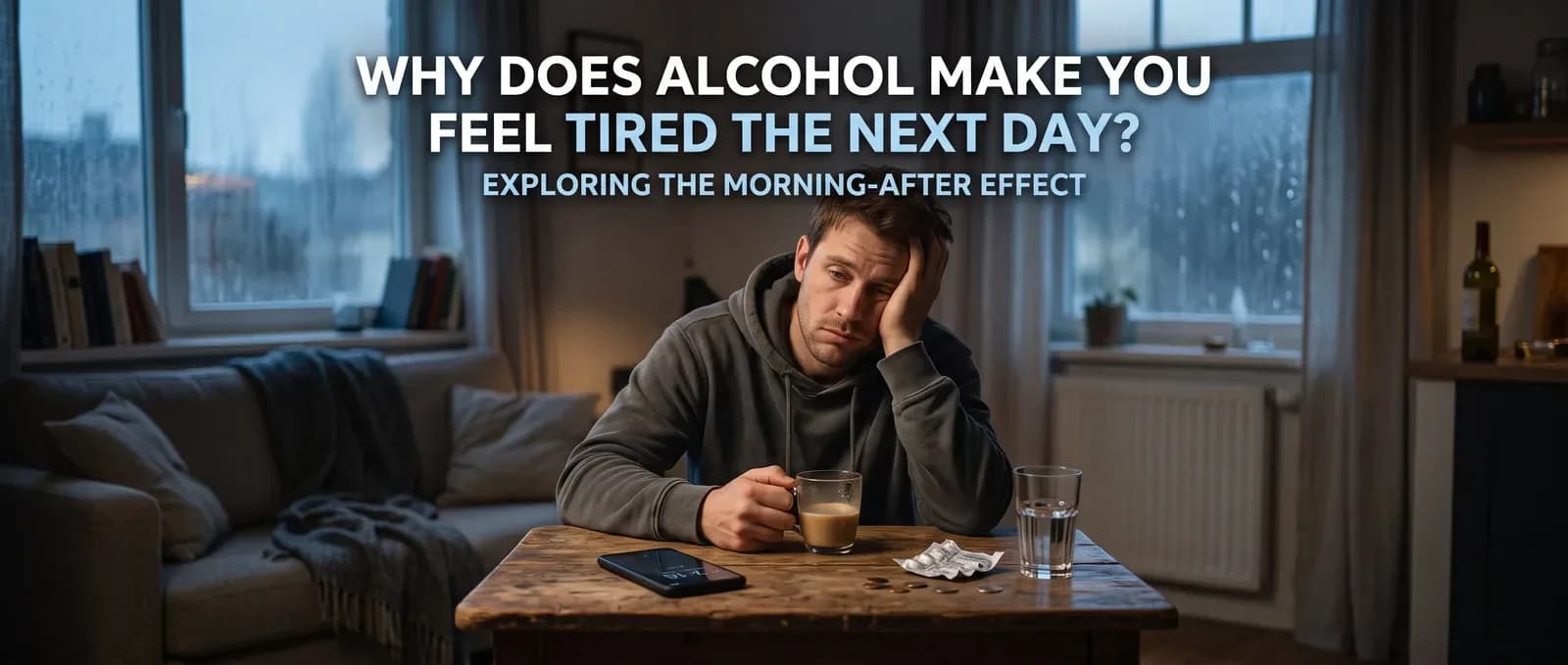
Alcohol can make you drowsy at first, but it disrupts sleep later in the night, so you can spend eight hours in bed and still wake up unrefreshed. Dehydration, the body still processing alcohol overnight and late-night eating also contribute to next-day tiredness. Drinking less, alternating with water, stopping earlier in the evening and eating beforehand are the simplest ways to reduce it.
You technically slept for eight hours.
So why do you still wake up feeling like you barely slept?
Feeling tired after drinking alcohol isn't necessarily about how long you were in bed.
Alcohol can influence multiple processes that affect how you feel the following day.
Alcohol Can Make You Sleepy—but That's Not the Whole Story
Alcohol can initially have sedating effects.
That's one reason some people associate a nightcap with falling asleep faster.
But falling asleep and getting high-quality restorative sleep aren't necessarily the same thing.
Alcohol can alter normal sleep patterns, particularly as the body metabolizes it throughout the night.
That can leave you waking up feeling less refreshed—even if the clock says you got enough hours.
Your Body Is Still Processing Alcohol While You Sleep
While you're sleeping, your liver hasn't clocked out for the night.
Alcohol is being metabolized.
Ethanol is first converted into acetaldehyde and subsequently into acetate through enzyme-driven processes.
Alcohol metabolism can also contribute to oxidative stress, particularly with higher or repeated exposure.
So while you may be resting, your body is still doing metabolic work.
Hydration Can Be Part of the Picture
Alcohol can increase urine production, which may contribute to fluid loss.
That's one reason hydration deserves attention when alcohol is part of an evening.
But drinking a gallon of water after a night out isn't a magic reset button.
Hydration is simply one piece of a much larger picture that includes alcohol quantity, food intake, sleep quality and individual biology.
Your Evening Choices Affect Your Morning
Instead of waiting until morning to think about recovery, think about your routine before the night begins.
Eat.
Hydrate.
Know your limits.
Pace yourself.
Give yourself time to sleep.
And remember that no supplement, coffee, meal or wellness hack makes excessive drinking risk-free.
Make Wellness Part of the Night Out
Taking care of yourself shouldn't stop just because you're going to dinner, celebrating with friends, attending a wedding, or enjoying a cocktail.
The idea is simple:
Be proactive about wellness—not reactive.
Tonight's choices become tomorrow's morning.
Enjoy the moment responsibly while continuing to support the body that's carrying you through it.
Scientific References
National Institute on Alcohol Abuse and Alcoholism. Alcohol Metabolism.
National Institute on Alcohol Abuse and Alcoholism. Resources on alcohol's effects on the body.
National Institutes of Health / PubMed Central. Research on ethanol metabolism, oxidative stress and liver physiology.
Related topics: Metabolize alcohol.