
How Does Your Body Metabolize Alcohol? ADH, ALDH and Acetaldehyde Explained
The path alcohol takes in the liver from ethanol to acetaldehyde, acetate and water, what affects its pace, and why coffee and cold showers do not help, in plain language.
By Root Health TürkiyePublished Updated 5 min read
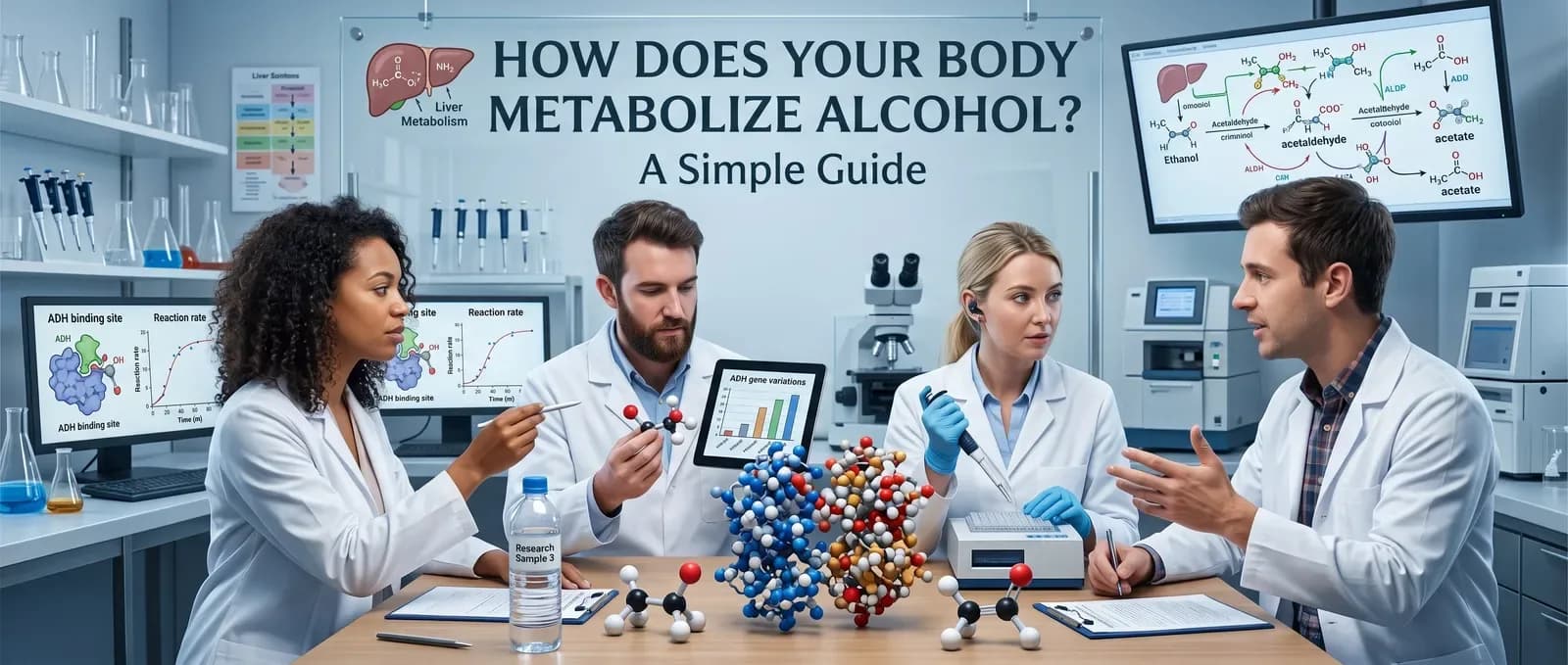
The body processes alcohol mostly in the liver in two enzyme steps: alcohol dehydrogenase (ADH) turns ethanol into acetaldehyde, and aldehyde dehydrogenase (ALDH) turns acetaldehyde into acetate, which is finally broken down into water and carbon dioxide and eliminated. This runs at a fairly steady rate, and it has not been shown that coffee, a cold shower or any other "sober-up" trick speeds it up. This article walks through alcohol's path from the first sip to elimination, why the intermediate acetaldehyde matters, and what influences the pace in plain language.
Where does alcohol go after you drink it?
Alcohol is absorbed from the stomach and small intestine into the bloodstream and spreads through the body. Unlike many nutrients, it cannot be "stored for later"; the body starts processing it right away. The US National Institute on Alcohol Abuse and Alcoholism (NIAAA) states that the bulk of alcohol metabolism takes place in the liver, with some processing in other tissues such as the pancreas and the brain. The result is not just "the buzz wearing off"; how the intermediate products are handled matters for health too.
Step 1: Ethanol becomes acetaldehyde
The main enzyme in alcohol metabolism is alcohol dehydrogenase (ADH). ADH converts ethanol into acetaldehyde. NIAAA describes acetaldehyde as a toxic compound and a known carcinogen with the potential to cause significant damage, particularly in the liver. That is why it matters that the body moves acetaldehyde quickly on to the next step.
Step 2: Acetaldehyde becomes acetate
The enzyme aldehyde dehydrogenase (ALDH) converts acetaldehyde into acetate. Acetate is then broken down into water and carbon dioxide, which the body can eliminate. Think of it as an assembly line:
Ethanol → Acetaldehyde → Acetate → Water + Carbon dioxide
Side routes such as cytochrome P450 2E1 (CYP2E1) and catalase play smaller roles, although CYP2E1 can become more active with regular, heavy drinking.
Oxidative stress and antioxidant defenses
Alcohol metabolism can generate reactive oxygen species, especially when pathways such as CYP2E1 are activated. When the balance between reactive molecules and antioxidant defenses is disrupted, the result is "oxidative stress". Zakhari's 2006 overview and a 2021 review by Hyun and colleagues on the pathophysiology of alcohol metabolism in the liver describe oxidative stress as one of the mechanisms involved in alcohol-related cell damage. Glutathione is one of the body's own antioxidant systems, but that does not mean taking an antioxidant "cancels out" alcohol. No supplement has been shown to remove the effect of alcohol on the liver.
Can you make your body process alcohol faster?
The short answer is no. Coffee may make you feel more alert but does not lower blood alcohol; caffeine can mask alcohol's sedating effect without fixing impaired judgment or reflexes. A cold shower does not reduce ethanol in the blood either. Time is what determines how fast alcohol is cleared. Processing a full standard drink takes more than an hour in most people, and drinking again before earlier drinks are processed can keep blood alcohol concentration rising. According to the US CDC, a standard drink contains 14 grams of pure alcohol, which is roughly 12 ounces of 5% beer, 5 ounces of 12% wine or 1.5 ounces of 40% (80-proof) spirits.
What affects the pace of metabolism?
- Genetics: Genetic variants of ADH and ALDH differ between people; in some, acetaldehyde lingers longer and can cause flushing, palpitations and nausea.
- Amount and drinking speed: If alcohol arrives faster than it is processed, blood levels climb.
- Nutrition status, body composition and sex: Food slowing absorption and body water content influence blood concentration.
- Medications and liver health: Some medicines and liver diseases change processing and safety; if you take medication, ask your doctor or pharmacist about alcohol.
Supporting your liver realistically
The liver processes many substances every day. What supports it is not an extraordinary product but the basics: balanced nutrition, regular movement, sleep, a healthy weight and keeping alcohol limited. For dietary variety, see why your gut microbiome loves variety, and for enough protein, how much protein you need. Be critical of supplements that promise liver or glutathione support: our guides to supplement ingredient quality and whether more ingredients mean a better supplement help you ask the evidence questions. Root's Clean Spirits product on this subject is not sold on our site, and we do not recommend any product that promises alcohol tolerance or liver protection in this article.
When to seek help
If you find it hard to cut down on alcohol, get tremors, sweating or anxiety when you stop, or have liver-related symptoms (yellowing of the skin or eyes, abdominal swelling, constant fatigue), contact a health professional. Do not drive after drinking; coffee or a shower does not make you safe.
References
- US National Institute on Alcohol Abuse and Alcoholism (NIAAA): Alcohol metabolism.
- Zakhari S. Overview: how is alcohol metabolized by the body? Alcohol Res Health. 2006;29(4):245-254. PubMed 17718403.
- Hyun J, Han J, Lee C, Yoon M, Jung Y. Pathophysiological aspects of alcohol metabolism in the liver. Int J Mol Sci. 2021;22(11):5717. doi.org/10.3390/ijms22115717.
- US Centers for Disease Control and Prevention (CDC): About standard drink sizes.
Conclusion
In the liver, alcohol is converted by ADH and ALDH first to toxic acetaldehyde, then to acetate, and finally to water and carbon dioxide. The pace is largely fixed; it has not been shown to be speeded by coffee, showers or supplements. What supports the liver is moderation, balanced nutrition, sleep and movement, and medical care when needed.
Frequently asked questions
How does the body metabolize alcohol?
Mostly in the liver: ADH turns ethanol into acetaldehyde, ALDH turns acetaldehyde into acetate, and acetate is broken down into water and carbon dioxide and eliminated.
Why does acetaldehyde matter?
NIAAA describes acetaldehyde as a toxic compound and a known carcinogen. The body works to convert it quickly to acetate.
Do coffee or a cold shower clear alcohol faster?
No. They have not been shown to lower blood alcohol; caffeine can mask the sedating effect without correcting impaired judgment.
How much alcohol is in a standard drink?
According to the CDC, 14 grams of pure alcohol: roughly 12 ounces of 5% beer, 5 ounces of 12% wine or 1.5 ounces of 40% spirits.
Does glutathione or an antioxidant supplement cancel out alcohol?
That has not been shown. Glutathione is one of the body's antioxidant systems, but taking an antioxidant does not erase alcohol's effects.