
Sleeping but Not Recovering? What Sleep and Recovery Really Mean
Seven or eight hours in bed do not guarantee recovery: sleep quality, stress, blood sugar swings and nutrient gaps can all affect how rested you feel. Consistent timing, morning light, regular movement, balanced meals and managing stress are the best-supported ways to improve recovery. This article explains the difference between sleep and recovery and daily habits that support both.
Door Root Health TürkiyeGepubliceerd op Bijgewerkt op 4 min. leestijd
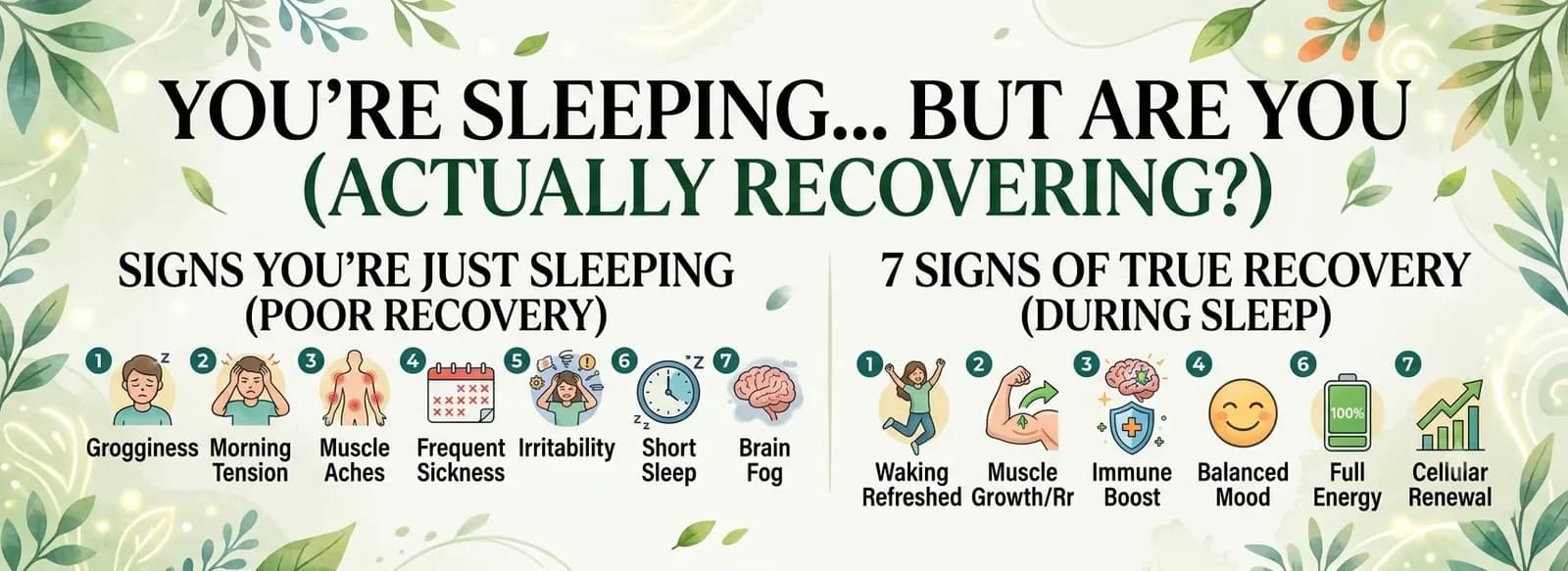
Seven or eight hours in bed do not guarantee recovery: sleep quality, stress, blood sugar swings and nutrient gaps can all affect how rested you feel. Consistent timing, morning light, regular movement, balanced meals and managing stress are the best-supported ways to improve recovery. This article explains the difference between sleep and recovery and daily habits that support both.
Why?
Because sleep and recovery aren't the same thing.
Sleep is the time your body attempts to repair muscles, regulate hormones, strengthen your immune system, process memories, balance blood sugar, and prepare you for the next day. If your body is constantly fighting inflammation, nutrient deficiencies, blood sugar swings, or chronic stress, it may not recover as efficiently, even if you're in bed long enough.
This article becomes about optimizing the body's ability to recover, not "helping you sleep."
The Modern Lifestyle is Working Against Your Sleep
Discuss:
- Blue light exposure
- Working late
- Too much caffeine
- Processed foods
- Constant stress
- Poor nutrient intake
Explain how these habits elevate cortisol, interfere with natural circadian rhythms, and leave many people feeling wired at night but tired during the day.
Recovery Starts the Moment You Wake Up
This is the twist most readers haven't considered.
The quality of tonight's sleep begins with what you do this morning.
Cover topics like:
- Stable energy throughout the day
- Hydration
- Exercise
- Nutrient intake
- Managing stress
- Avoiding excessive stimulants late in the day
Supporting Your Body Throughout the Day
This is where the products naturally fit.
Instead of relying on multiple coffees or sugary energy drinks that may contribute to afternoon crashes, some people choose a nootropic formula like Zero In to support focus and sustained energy during the day. Better daytime energy habits may help reduce reliance on stimulants later in the afternoon, which can interfere with sleep.
Many Americans fall short on fruits and vegetables, leaving them with fewer vitamins, minerals, antioxidants, and phytonutrients than recommended. Nutrient-rich greens can help fill dietary gaps and support overall wellness, including many systems involved in healthy recovery.
The liver plays a central role in metabolism and processing substances your body encounters every day. Supporting normal liver function is part of maintaining overall health and recovery, especially when combined with healthy lifestyle habits.
Build a Better Recovery Routine
Offer a practical checklist:
- Morning sunlight within an hour of waking
- Hydrate before coffee
- Eat protein early
- Stay active during the day
- Limit caffeine later in the afternoon
- Reduce screen time before bed
- Maintain a consistent sleep schedule
Instead of chasing another sleep hack, consider supporting the systems your body relies on every day. Healthy recovery starts with good habits, proper nutrition, and giving your body the tools it needs to function at its best.
Featured Products:
References
Sleep and Overall Health
Watson NF, Badr MS, Belenky G, et al. Recommended amount of sleep for a healthy adult: A joint consensus statement of the American Academy of Sleep Medicine and Sleep Research Society. Journal of Clinical Sleep Medicine.2015;11(6):591-592. https://doi.org/10.5664/jcsm.4758
Medic G, Wille M, Hemels ME. Short- and long-term health consequences of sleep disruption. Nature and Science of Sleep. 2017;9:151-161. https://doi.org/10.2147/NSS.S134864
Circadian Rhythm and Recovery
Czeisler CA. Perspective: Casting light on sleep deficiency. Nature. 2013;497:S13. https://doi.org/10.1038/497S13a
Walker MP. Why We Sleep: Unlocking the Power of Sleep and Dreams. Scribner; 2017. (A widely cited synthesis of sleep science for a general audience.)
Nutrition and Sleep
St-Onge MP, Mikic A, Pietrolungo CE. Effects of diet on sleep quality. Advances in Nutrition. 2016;7(5):938-949. https://doi.org/10.3945/an.116.012336
Physical Activity and Sleep
Kredlow MA, Capozzoli MC, Hearon BA, et al. The effects of physical activity on sleep: A meta-analytic review. Journal of Behavioral Medicine. 2015;38:427-449. https://doi.org/10.1007/s10865-015-9617-6
Related topics: Brain fog.