Brain Fog or Digital Overload? Why It Feels Harder to Concentrate (Hooked Part 4)
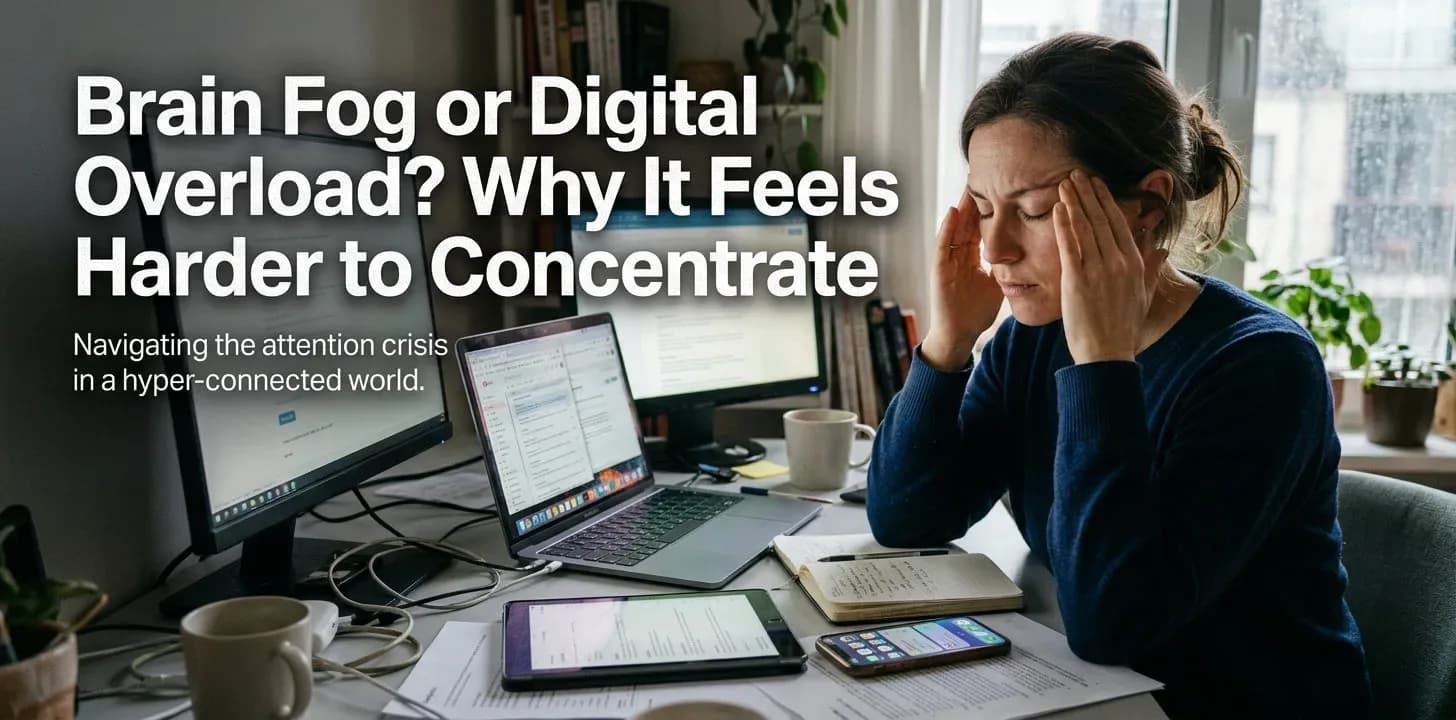
Not every bad day is brain fog and not every concentration problem is caused by a smartphone: sleep, stress, nutrition, workload, medications and health conditions all affect cognition, but constant interruptions from technology can make sustained focus harder. Protecting your cognitive environment, for example by limiting interruptions and batching notifications, is the first step, and nutrition plays a supporting role. This part of the Hooked series explains the interruption problem and what helps.
بقلم Root Health Türkiyeنُشر في حُدِّث في مدة القراءة: 5 دقيقة
Not every bad day is brain fog and not every concentration problem is caused by a smartphone: sleep, stress, nutrition, workload, medications and health conditions all affect cognition, but constant interruptions from technology can make sustained focus harder. Protecting your cognitive environment, for example by limiting interruptions and batching notifications, is the first step, and nutrition plays a supporting role. This part of the Hooked series explains the interruption problem and what helps.
"I used to be able to read for an hour."
"I can't work without checking my phone."
"My brain feels scattered."
Those experiences are increasingly familiar.
But they're also easy to mislabel.
Not every bad day is "brain fog."
And not every concentration problem is caused by a smartphone.
Sleep, stress, nutrition, workload, medications, health conditions and dozens of other factors can affect cognition.
Still, the way we interact with technology can make maintaining uninterrupted attention substantially more difficult.
The Interruption Problem
Imagine trying to write something important while another person taps you on the shoulder every few minutes.
Eventually, you'd become irritated.
You'd lose your train of thought.
You'd need time to reorient yourself.
Yet we voluntarily carry a device that can do exactly that all day.
Email.
Texts.
Social media.
News alerts.
App notifications.
Group chats.
Even when the interruption lasts only seconds, your attention has moved.
Research reviews have found that active engagement with smartphones can interfere with ongoing cognitive tasks, while evidence regarding longer-term cognitive consequences is more mixed. (PubMed Central (PMC))
So instead of exaggerating the science, let's focus on the part we can control.
Protect Your Cognitive Environment
Create blocks where interruption is impossible.
Start with 30 minutes.
Phone away.
Notifications off.
One task.
No tab switching.
No checking.
No "just one second."
You're training the ability to stay.
And then gradually extend the block.
What About Nutrition?
Your brain is metabolically active tissue.
Its ability to function depends on nutrients, oxygen, sleep, circulation and countless biochemical processes.
That's why a comprehensive focus strategy shouldn't stop at app settings.
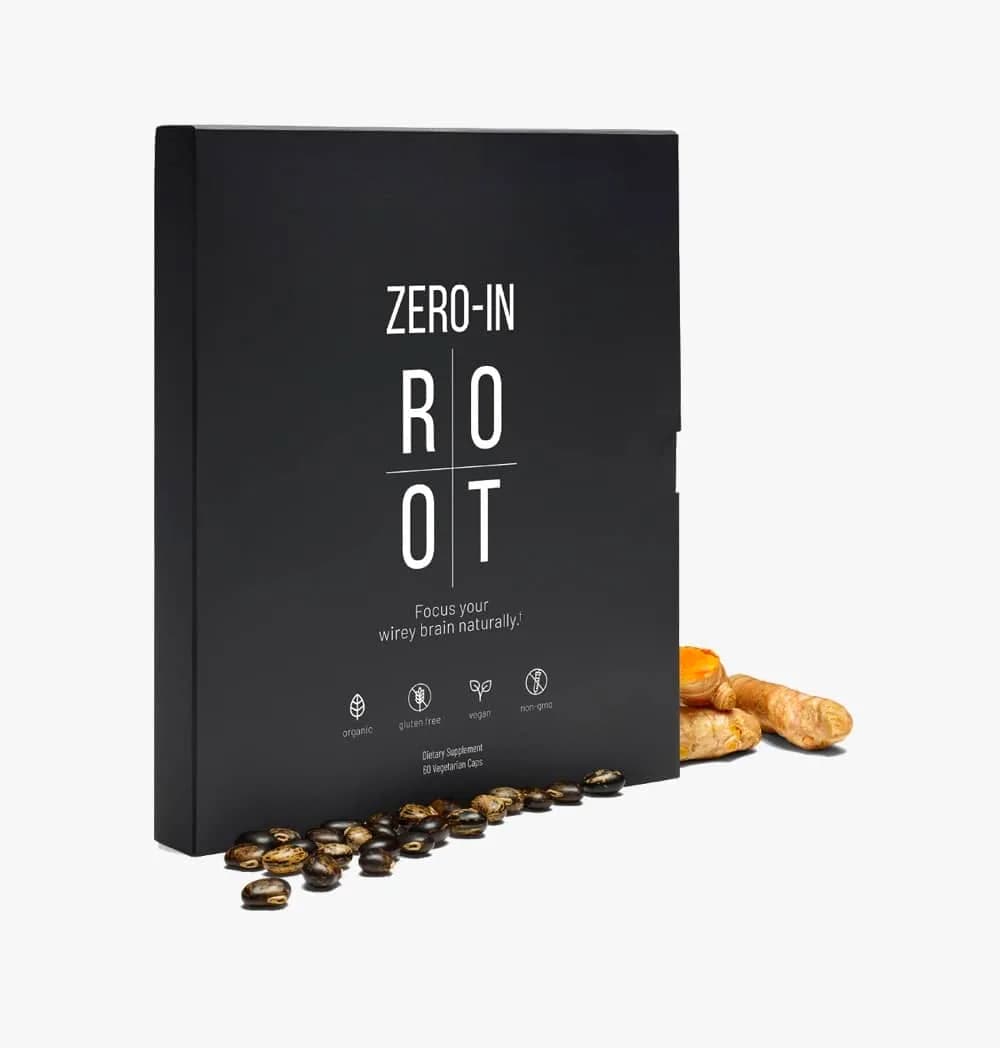
Zero In includes ingredients targeting several dimensions of cognitive support.
Pine Bark Extract
Pine bark contains polyphenolic compounds and has been researched for a variety of physiological effects.
Evidence relating specifically to cognition isn't definitive, but human studies have reported potential benefits in certain populations and circumstances.
A 2024 review summarized 39 randomized, double-blind, placebo-controlled clinical trials of a standardized French maritime pine bark extract across multiple health outcomes, including cognition. (PubMed)
An important caveat: results from research on a particular standardized extract cannot automatically be assumed to apply identically to every pine bark ingredient.
That's why the appropriate Zero In claim remains cognitive support, not treatment.
Turmeric and Curcumin
Turmeric provides compounds including curcumin that have attracted substantial research interest for antioxidant and inflammatory pathways.
The cognitive evidence is mixed.
A meta-analysis of randomized trials found a statistically significant benefit for working memory but not several other cognitive domains. (PubMed Central (PMC))
Another randomized study in healthy adults found no meaningful improvement in most cognitive outcomes. (PubMed Central (PMC))
Other controlled trials using particular bioavailable curcumin preparations have reported improvements in selected measures of working memory and mood. (PubMed Central (PMC))
That makes the scientifically responsible conclusion:
Curcumin is promising, but outcomes depend on the population, formulation, dose and cognitive measure studied.
Why That Matters for Zero In
A good nootropic story shouldn't be:
"This ingredient makes everyone smarter."
It should be:
The brain performs through multiple interconnected systems, so Zero In combines ingredients chosen to support several of them.
ROOT's own formula materials describe this multi-pathway rationale: dopamine precursor support, focused alertness, serotonin-related biology, and botanical support related to oxidative stress.
That story is stronger precisely because it doesn't depend on one single ingredient.
The Focus Formula Is Bigger Than the Capsule
If concentration has become difficult, begin with the fundamentals:
Reduce unnecessary notifications. Protect sleep. Move daily. Get outside. Eat well. Schedule uninterrupted work. Create meaningful goals. Use technology intentionally.
Then think of Zero In as support for that system—not a replacement for it.
Your internal HOOKED material expresses the same philosophy: the behavioral protocol is foundational, while Zero In fits alongside it as nutritional support rather than replacing those behaviors.
That should become one of the signature messages of this entire series.
Clear the Noise. Support the Focus. Better sleep, movement, nutrition, and fewer interruptions all play a role in cognitive performance. Zero In was created to complement those habits with nutritional support for focus, clarity, alertness, energy, and mood. Build a better environment for your brain—and give it the support to perform.
Discover Zero In TODAY
References
Wilmer HH, Sherman LE, Chein JM. Smartphones and Cognition. Frontiers in Psychology. 2017. (PubMed Central (PMC))
Rohdewald PJ. et al. Review of randomized clinical research involving French maritime pine bark extract. Frontiers in Nutrition. 2024. (PubMed)
Zhu LN, et al. The Effect of Curcumin Differs on Individual Cognitive Domains Across Different Patient Populations: A Systematic Review and Meta-Analysis. 2021. (PubMed Central (PMC))
المراجع
- Wilmer HH, Sherman LE, Chein JM. Smartphones and Cognition. Frontiers in Psychology. 2017. ( PubMed Central (PMC) )
- Rohdewald PJ. et al. Review of randomized clinical research involving French maritime pine bark extract. Frontiers in Nutrition. 2024. ( PubMed )
- Zhu LN, et al. The Effect of Curcumin Differs on Individual Cognitive Domains Across Different Patient Populations: A Systematic Review and Meta-Analysis. 2021. ( PubMed Central (PMC) )