N-Acetyl-L-Tyrosine (NALT) and Attention: What Is Known About Focus Under Stress
N-acetyl-L-tyrosine (NALT) is a form of the amino acid tyrosine, used to make dopamine and norepinephrine, and has been studied in the context of cognitive load under stress. This article explains the relationship between attention, executive function and neurotransmitter demand. Tyrosine and NALT do not treat ADHD or any other disease; talk to a healthcare professional if you are concerned.
بقلم Root Health Türkiyeنُشر في حُدِّث في مدة القراءة: 4 دقيقة

N-acetyl-L-tyrosine (NALT) is a form of the amino acid tyrosine, used to make dopamine and norepinephrine, and has been studied in the context of cognitive load under stress. This article explains the relationship between attention, executive function and neurotransmitter demand. Tyrosine and NALT do not treat ADHD or any other disease; talk to a healthcare professional if you are concerned.
Attention‑Deficit/Hyperactivity Disorder (ADHD) is a neurodevelopmental condition characterized by persistent patterns of inattention, impulsivity, and executive dysfunction. At a neurochemical level, ADHD has been strongly linked to dysregulation of dopamine and norepinephrine signaling in the prefrontal cortex—the brain region responsible for attention control, working memory, and decision‑making.
With increasing interest in non-stimulant cognitive support, nutritional strategies to promote neurotransmitter balance are being explored. N‑Acetyl‑L‑Tyrosine (NALT), a bioavailable derivative of the amino acid L‑tyrosine, is frequently studied in this context.
Dopamine, Norepinephrine, and ADHD
Dopamine and norepinephrine are catecholamine neurotransmitters essential for:
- Sustained attention
- Task initiation and completion
- Behavioral inhibition
- Cognitive flexibility
Research consistently demonstrates that individuals with ADHD exhibit reduced catecholamine signaling efficiency, particularly during stress or cognitive overload. While pharmaceutical stimulant medications increase catecholamine activity pharmacologically, nutritional approaches aim to support neurotransmitter synthesis.
L‑tyrosine serves as the biochemical precursor to dopamine and norepinephrine, converted through the tyrosine hydroxylase pathway. Under high cognitive demand, precursor availability may become conditionally limiting.
What Makes N‑Acetyl‑L‑Tyrosine Different?
N‑Acetyl‑L‑Tyrosine is acetylated to improve aqueous solubility and stability in supplement formulations. Although NALT must be deacetylated to yield free tyrosine, studies indicate it remains functionally relevant during acute stress and demanding cognitive tasks.
Unlike stimulants, NALT does not induce neurotransmitter release. Instead, it supports the brain’s natural capacity to synthesize neurotransmitters, making it relevant for context-dependent support rather than baseline enhancement.
Evidence for Tyrosine in Attention and Cognitive Performance
Human studies demonstrate that tyrosine supplementation:
- Preserves working memory during stress
- Cognitive flexibility under multitasking conditions has been studied
- Maintains reaction time during fatigue or sleep loss
These benefits are observed under stress, rather than during low-demand states, which aligns closely with the cognitive strain associated with ADHD.
It is important to clarify that tyrosine and NALT do not treat ADHD. Current evidence supports their use solely as adjunctive, situational support during periods of cognitive demand.
Executive Function and Mental Clarity
Executive function deficits—difficulty planning, organizing, prioritizing, and inhibiting impulses—are core to ADHD. Neurochemically, these processes depend heavily on prefrontal dopamine regulation.
By supporting upstream dopamine synthesis, N‑Acetyl‑L‑Tyrosine may help stabilize executive performance during periods of high cognitive load, particularly in occupational, academic, or creative settings.
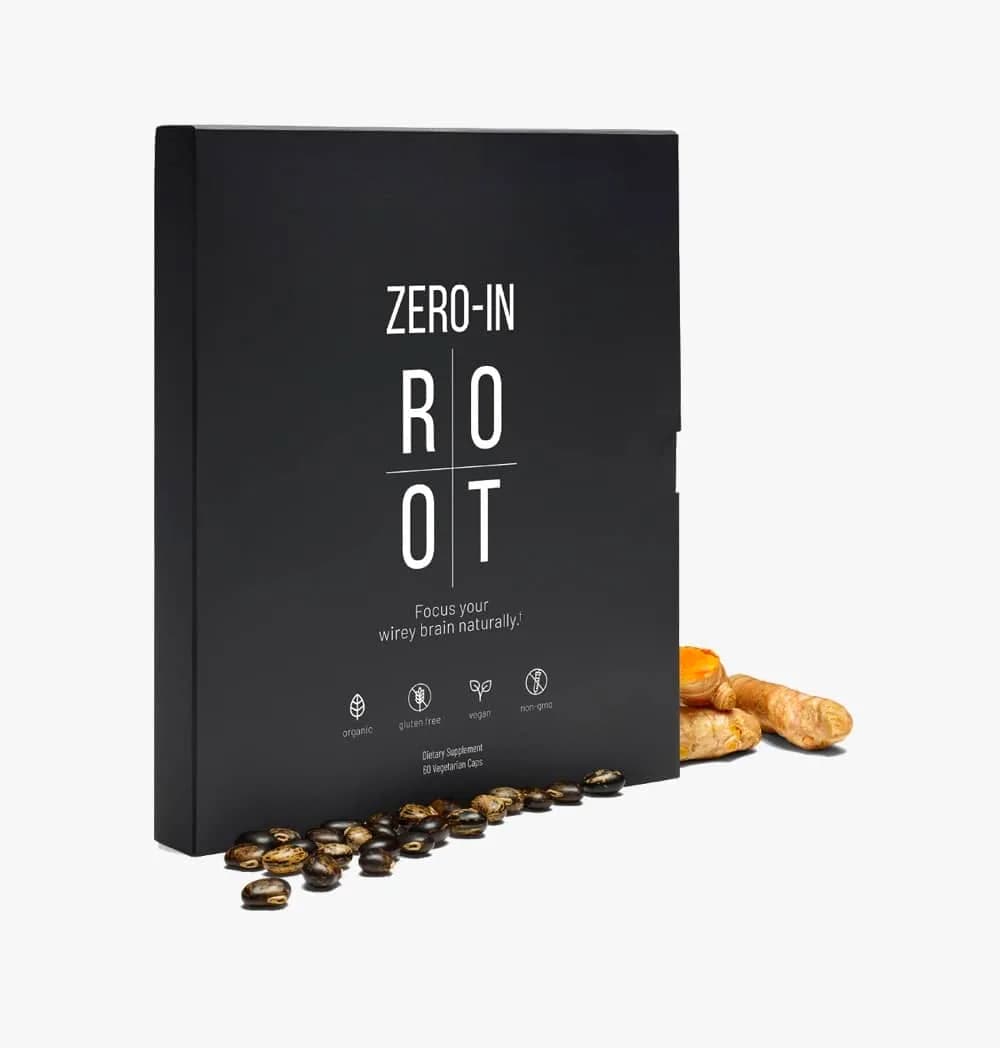
Zero-In is a formula developed by Dr. Christina Rahm that contains N-acetyl-L-tyrosine, L-theanine and other ingredients; see the product page for label details.
Formulated with purposefully selected ingredients such as N‑Acetyl L‑Tyrosine, Mucuna pruriens, L‑theanine, and precise caffeine dosing, Zero‑In® is designed to work synergistically with human biology rather than override it.
Zero‑In® distinguishes itself as a research-driven supplement grounded in neuroscience.
Zero‑In® prioritizes scientific rigor and uncompromised performance.
Although ADHD is not caused by a tyrosine deficiency, the cognitive strain associated with ADHD can increase neurotransmitter demand. N-Acetyl-L-Tyrosine is a non-stimulant nutrient that has been studied in relation to attention and executive function under pressure; it does not claim to treat any disease.
References (APA)
Ahn, J., Ahn, H. S., Cheong, J. H., & dela Peña, I. (2016). Natural product-derived treatments for attention-deficit/hyperactivity disorder: Safety, efficacy, and therapeutic potential of combination therapy. Neural Plasticity, 2016, Article 1320423. https://doi.org/10.1155/2016/1320423
Banderet, L. E., & Lieberman, H. R. (1989). Treatment with tyrosine, a neurotransmitter precursor, reduces environmental stress in humans. Brain research bulletin, 22(4), 759–762. https://doi.org/10.1016/0361-9230(89)90096-8
Bloemendaal, M., Froböse, M. I., Wegman, J., Zandbelt, B. B., van de Rest, O., Cools, R., & Aarts, E. (2018). Neuro-Cognitive Effects of Acute Tyrosine Administration on Reactive and Proactive Response Inhibition in Healthy Older Adults. eNeuro, 5(2), ENEURO.0035-17.2018. https://doi.org/10.1523/ENEURO.0035-17.2018
Fernstrom, J. D., & Fernstrom, M. H. (2007). Tyrosine, phenylalanine, and catecholamine synthesis and function in the brain. The Journal of nutrition, 137(6 Suppl 1), 1539S–1548S. https://doi.org/10.1093/jn/137.6.1539S
Jackson, E. F., Riley, T. B., & Overton, P. G. (2025). Serotonin dysfunction in ADHD. Journal of neurodevelopmental disorders, 17(1), 20. https://doi.org/10.1186/s11689-025-09610-y
Nieoullon A. (2002). Dopamine and the regulation of cognition and attention. Progress in neurobiology, 67(1), 53–83. https://doi.org/10.1016/s0301-0082(02)00011-4\