Military Toxic Exposure: What US Veterans Faced and How the Body's Own Clearance Systems Fit In
From burn pits and PFAS to Agent Orange and secret test programmes, this guide explains what US service members were exposed to, how veterans fought for recognition and what research says about lifestyle support.
By Root Health TürkiyePublished Updated 6 min read
Military toxic exposure means contact with harmful chemicals, radiation or biological agents during service, whether through the air soldiers breathed, the water they drank or tests they took part in. In the United States, millions of veterans report health problems linked to such exposures, and official recognition has often taken decades. This article walks through the main sources, the long fight for benefits and what studies say about supporting the body's own processes.
A wider problem than one chemical
The term covers a whole range of hazards: smoke from open-air burn pits, “forever chemicals” seeping into groundwater, herbicides sprayed in war zones, fallout from nuclear testing and chemical or biological trials that stayed classified for years.
For readers in Europe this may sound like a distant American story, yet several of the same issues are on the agenda here too. PFAS contamination, for instance, has prompted a proposal for a broad EU-wide restriction submitted to the European Chemicals Agency (ECHA) in 2023. We focus on the US because that is where most of the documented data on service members comes from.
Where the exposure came from
Classified test programmes
Between 1945 and 1992 the US military carried out more than 1,000 nuclear weapons tests, exposing over 500,000 service members to varying levels of radiation. Because the atomic testing programme was only fully declassified in 1996, participants could not speak about their experience before then. Even today, roughly 86% of sick “atomic veterans” have reportedly had their disability claims denied by the Department of Veterans Affairs (VA).
Project 112, run from 1962 to 1973, exposed tens of thousands of personnel to chemical and biological agents. Under one of its sub-programmes, Project SHAD (Shipboard Hazard and Defense), toxic chemicals and biological irritants were sprayed onto 13 ships carrying 6,000 service members. The tests remained secret until 2000, which kept sailors from filing claims for decades.
Polluted air and water on bases
Open-air pits used to burn military waste release smoke containing substances such as dioxins and benzene, which research has associated with cancer and serious respiratory disorders. In water, per- and polyfluoroalkyl substances (PFAS) are the main concern. Found at high concentrations at more than 700 military sites, these persistent compounds can leak from storage areas into groundwater, and hundreds of thousands of veterans are thought to have been exposed to chemicals linked with liver, immune and cancer risks.
Chemicals on the battlefield
The best-known case is the Vietnam War, during which 2.7 million American troops were exposed to Agent Orange, a dioxin-containing herbicide that has been linked to many forms of cancer.
Camp Lejeune: when families were affected too
From 1953 to 1987 more than a million Marines and their family members lived at Camp Lejeune in North Carolina, where drinking water contained dozens of toxic chemicals at up to 3,000 times the safe limit. The contamination was identified in 1980 and traced to leaking storage tanks and industrial activity, yet it was not disclosed until 1999. The VA now treats the following as presumptive conditions for this exposure:
- Adult leukaemia
- Aplastic anaemia and other myelodysplastic syndromes
- Bladder cancer
- Kidney cancer
- Liver cancer
- Multiple myeloma
- Non-Hodgkin lymphoma
- Parkinson's disease
Gulf War illness: three decades without an official name
Service members deployed to Iraq and Afghanistan from 1990 onwards encountered a long list of hazards. According to the US Department of Veterans Affairs, personnel in the Gulf War and Southwest Asia theatre were regularly exposed to:
- Depleted uranium
- Chemical and biological weapons
- Pesticides
- Oil well fires
- Infectious diseases
- Sand and dust, which can be linked to respiratory problems when inhaled regularly
Of the 700,000 veterans of the first Gulf War (1990–1991), up to 30% developed a mix of symptoms resembling chronic fatigue syndrome, fibromyalgia, arthritis, irritable bowel syndrome, asthma and dementia. Only in 2025 did the US Centers for Disease Control and Prevention formally recognise Gulf War illness as a genuine medical condition.
The fight for recognition: the PACT Act and beyond
A 2024 report commissioned by veterans' organisations put the average wait for disability compensation for toxic-exposure illnesses at 31.4 years. The PACT Act, passed by Congress in 2022, significantly widened access to VA benefits for those exposed to hazardous chemicals and biological agents, though many veterans still struggle to obtain care.
A more recent bill, the CLARITY Act, would require the VA to publish a public website with full information on military toxic exposures. In a statement, its lead sponsor, Connecticut Senator Richard Blumenthal, stressed that veterans need to know whether their condition qualifies for presumptive care and benefits under the PACT Act.
These are US mechanisms. In European countries, veterans' entitlements and occupational disease compensation follow national rules, so anyone affected should seek advice from the relevant authority and from legal or medical professionals.
What research says about lifestyle-based support
In a 2019 study of Gulf War veterans, participants followed a six-week daily programme of exercise, sauna-induced sweating and a set of supplements. Improvements were recorded in 11 of 16 measures of pain, fatigue and quality of life. It was a small study and is no substitute for medical care, but it shows researchers are interested in habits that support the body's own clearance pathways.
In everyday life those habits are familiar: enough water, a varied high-fibre diet, regular movement, good sleep and cutting down on sources of exposure. If you would like to read more, see our guide to heavy metals in the body and our piece on wildfire smoke and toxic exposure.
Dr Christina Rahm and the ROOT approach
According to ROOT, co-founder and chief formulator Dr Christina Rahm holds several postgraduate degrees in nutrition and health sciences. In a podcast interview she describes falling seriously ill with Lyme disease at 19 and, alongside antibiotics and conventional care, turning to nutrition and lifestyle. That personal story shaped her focus on natural ingredients.
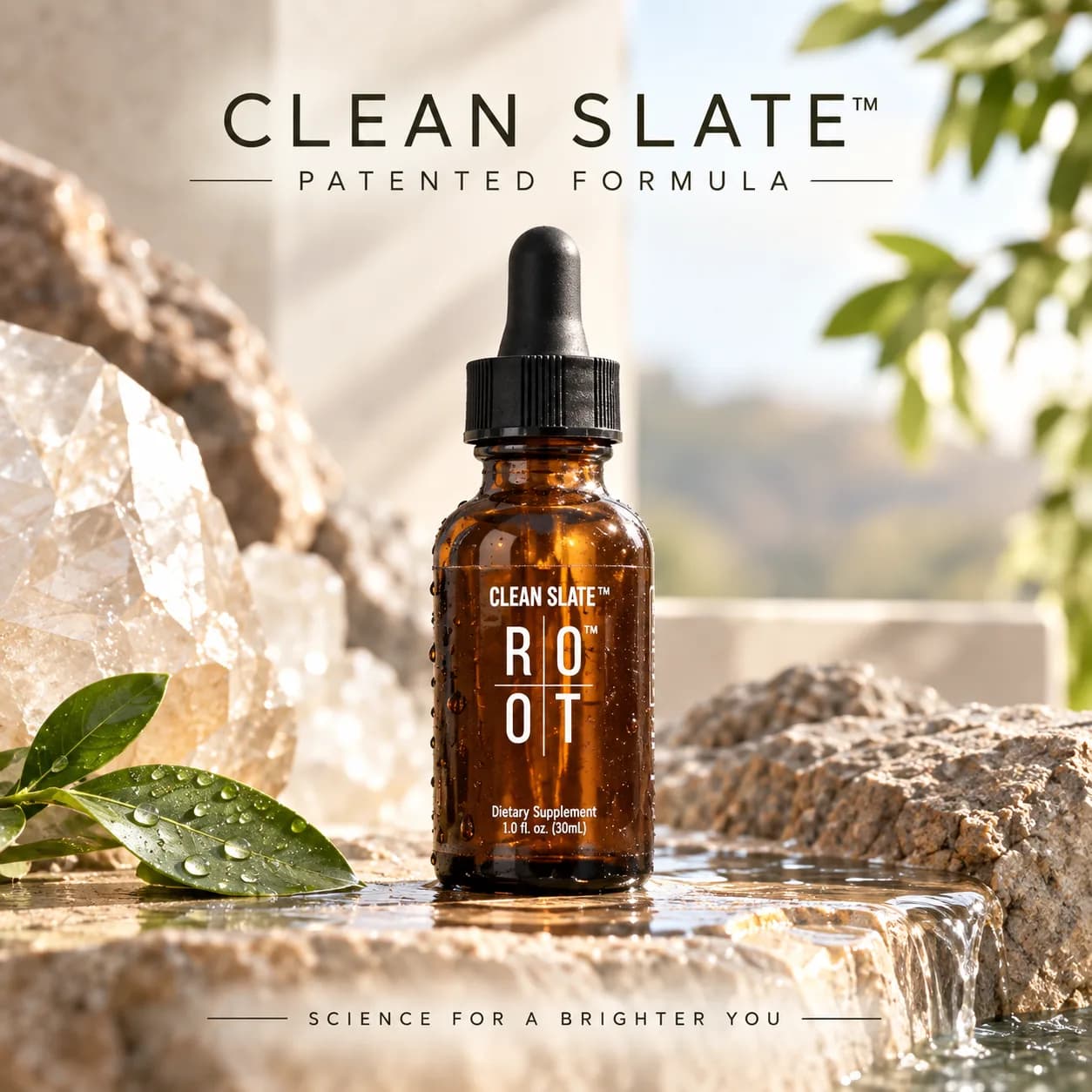
ROOT's best-known product, Clean Slate, is a liquid food supplement taken as drops from a 30 ml bottle. ROOT makes it with a patent-pending process that starts from clinoptilolite, a type of zeolite, and turns it into a fine silica solution. According to the US label, a 10-drop serving provides 14 mg of vitamin C and 6 mg of magnesium, and adults are directed to take up to 10 drops twice a day. Clean Slate is not a treatment; if you have a history of toxic exposure, discuss any supplement with your doctor first.
Bottom line
The story of military toxic exposure in the US shows how chemical risks can surface years later, and how secrecy can delay people's access to care. Laws such as the PACT Act and calls for transparency are slowly changing that. On a personal level, the most reliable path is to share your exposure history with a doctor, get the right tests and support your body with the basics: nutrition, movement and sleep.
Frequently asked questions
What are the main sources of military toxic exposure?
Smoke from open-air burn pits, PFAS contamination on bases, battlefield chemicals such as Agent Orange, nuclear weapons testing and long-classified chemical and biological test programmes such as Project 112 and Project SHAD.
What is the PACT Act?
Passed by the US Congress in 2022, the PACT Act significantly expanded access to VA disability benefits for service members exposed to hazardous chemicals and biological agents. It applies only in the United States.
Has Gulf War illness been officially recognised?
Yes. The cluster of symptoms seen in up to 30% of the 700,000 first Gulf War veterans was formally recognised as a real medical condition by the US Centers for Disease Control and Prevention in 2025.
Can supplements make up for toxic exposure?
No. Anyone with a history of exposure should see a doctor and have the appropriate tests first. Nutrition, exercise, sleep and supplements can only complement that medical assessment and are best planned with a healthcare professional.