Relive Greens vs AG1: What to Check When Choosing a Greens Powder
A fair comparison of Relive Greens and AG1 on ingredients, fiber, serving size and cost, plus what to look for on the label and who each might suit.
By Root Health TürkiyePublished Updated 5 min read
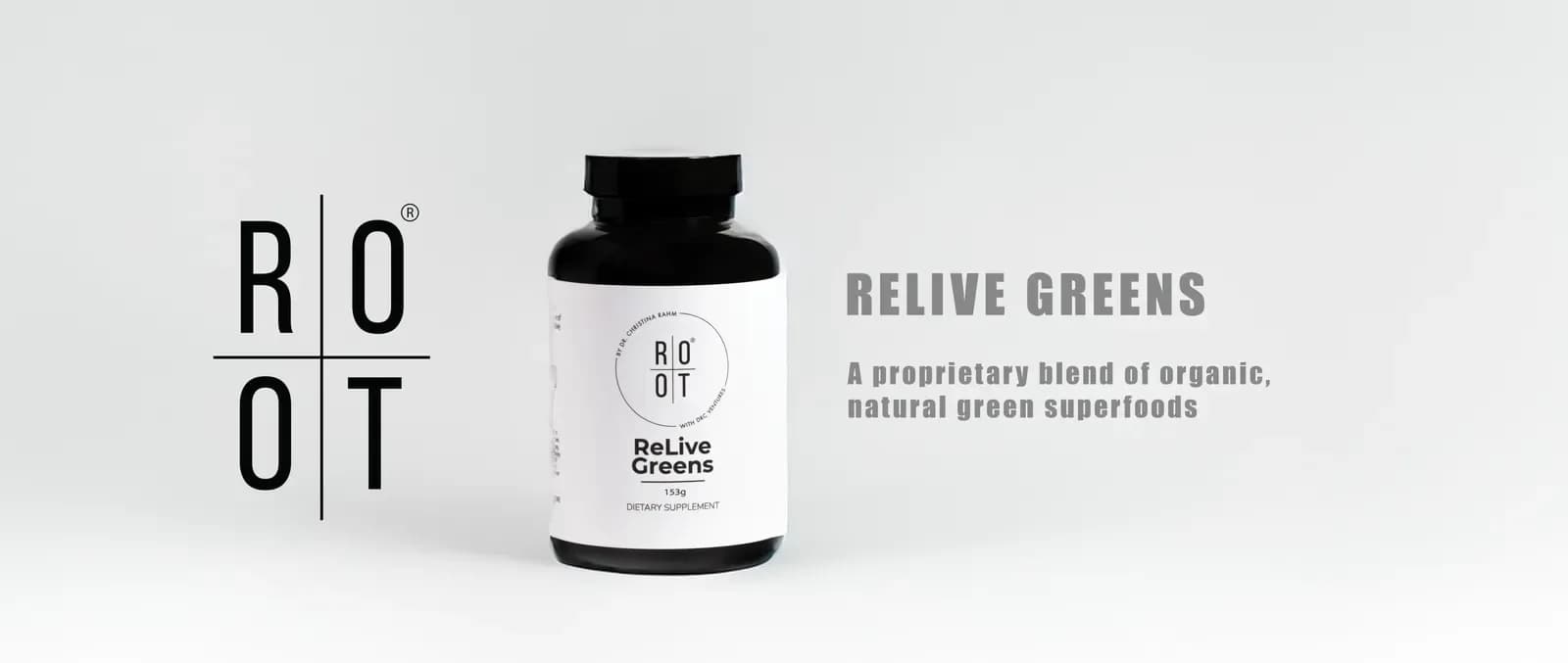
There is no single winner between Relive Greens and AG1 for everyone; both sit in the greens-powder category but speak to different priorities. Relive Greens centers on a smaller serving built from vegetables, fruit and several fiber sources plus prebiotic and probiotic ingredients, while AG1 is known for its broad vitamin and mineral coverage. The right pick depends on your budget, how much you care about fiber and gut-focused ingredients, and what is actually on each label.
What to look for when choosing a greens powder
A greens powder does not replace vegetables and fruit; it is a convenient add-on. So when you compare two products, these questions are more useful than any slogan:
- Is the formula mostly whole-food sources, or large doses of added vitamins and minerals?
- Does it contain fiber and prebiotics, and how varied are they?
- If it contains probiotics, are the species and strains named on the label?
- Is the serving size realistic for daily use, and what does a month cost?
- Is there allergen information and third-party testing or certification?
The ingredient profile of Relive Greens
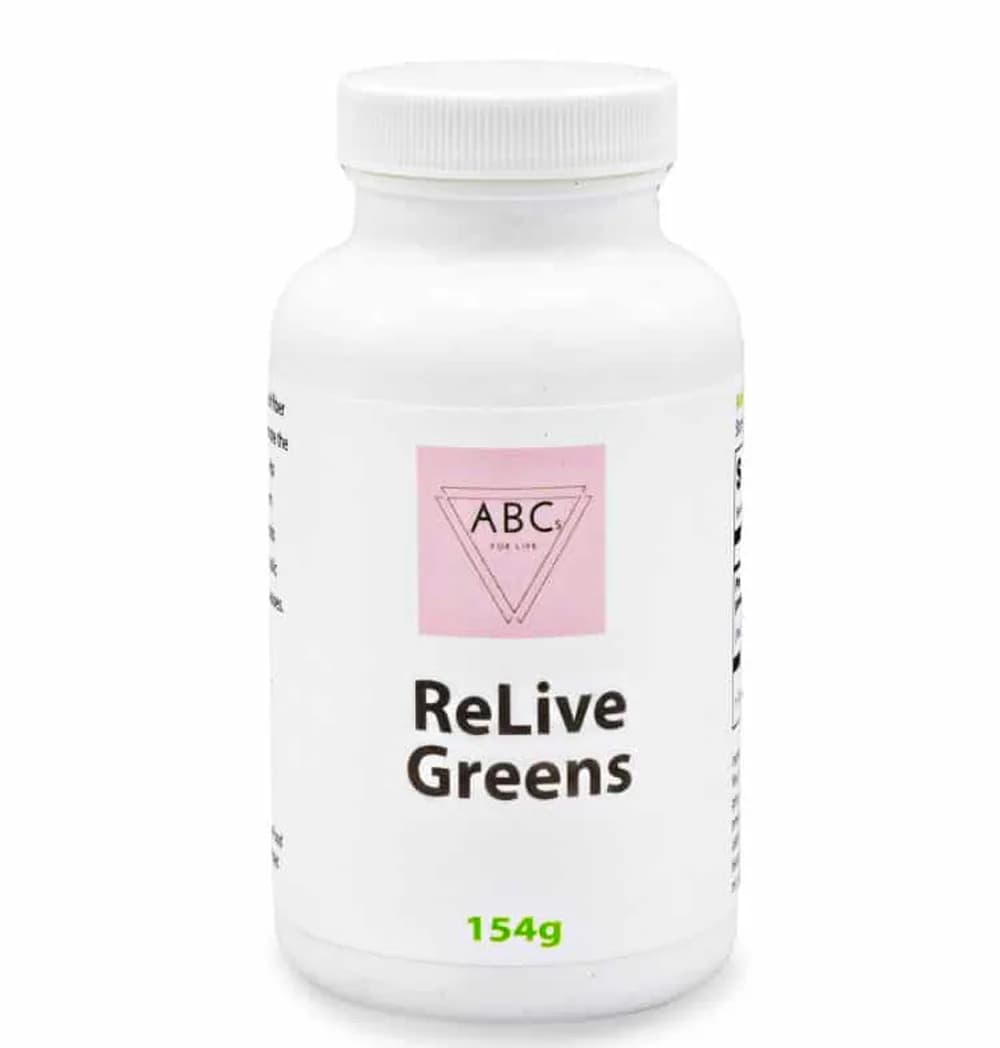
Relive Greens comes in a 153 g container, and its product page shows BSCG certification, GMP, made-in-USA, non-GMO and vegan marks. Its ingredients are easiest to read in three groups:
- Vegetables and green plants: broccoli, kale, spinach, green cabbage, parsley, wheat grass, barley grass, alfalfa leaf, spirulina and chlorella.
- Fruit and other botanicals: blueberry, pomegranate seed and aloe vera.
- Fiber and gut-oriented ingredients: green banana flour, apple fiber, flax seed, psyllium husk and inulin, plus the probiotic Bacillus coagulans.
Root says the product is designed to support ketosis and metabolic performance. That is a manufacturer claim; we have not verified it, and we do not assume that any supplement alone decides weight or metabolism.
Serving size and cost
The figures below are the ones Root gives in its own comparison article. We suggest checking AG1's figures on its label and official page yourself, because formulas and prices change over time.
| Measure | Relive Greens | AG1 |
|---|---|---|
| Serving size (as reported by Root) | 5.15 g | 13 g |
| Monthly cost (as reported by Root) | $79 | $100 |
A smaller serving has a practical upside: it is easier to mix, carry and take every day. But a smaller serving can also mean less of each ingredient, so "more concentrated" should not count as a clear advantage until you have looked at the gram amounts on the label.
Fiber and gut focus
What stands out in Relive Greens is the variety of fiber sources: inulin, psyllium, flax seed, apple fiber and green banana flour appear together. Different fibers interact with gut microorganisms in different ways, which is why aiming for plant variety makes more sense than hunting for one "best" fiber. We go deeper into that idea in our article on why the gut microbiome loves variety. Ingredients such as inulin and resistant starch are studied as prebiotics, but human data vary by product and dose, so do not treat the product as a cure or a guaranteed gut fix.
If you are new to a high-fiber product, start with a small amount and drink plenty of water to reduce the chance of bloating.
What AG1 brings to the table
AG1 is a widely recognized brand with a long ingredient list; its formula is described as including many vitamins, minerals, botanicals and probiotics. If you want broad vitamin and mineral coverage, that can be a plus. On the other hand, higher doses of vitamins and minerals do not always mean better results, and if you already take a multivitamin or other supplements you need to watch your total intake. Brand recognition and ingredient quality are different things; decide from the label, not the marketing.
Which one fits whom?
| Your priority | What to check |
|---|---|
| A fiber- and gut-focused routine | Variety and grams of fiber types, and whether probiotic strains are named on the label. |
| Broad vitamin and mineral coverage | The label percentages against your total daily intake and any other supplements you take. |
| Budget and ease of use | Cost per serving, serving size, taste and how well it mixes. |
| Dietary restrictions | Vegan suitability, allergen information and third-party test documents. |
A greens powder does not replace vegetables
Whichever you choose, a powder does not stand in for daily vegetables, fruit, legumes and whole grains. The healthiest way to see greens powders is as a practical way to add variety on busy days. If you have a health condition, take medication or are pregnant or nursing, talk to your doctor before starting a new supplement.
Sources
The sources below are those listed in Root's comparison article; they have not been re-verified on this page.
- Li et al. (2025), Frontiers in Nutrition: review of inulin as a functional prebiotic.
- Xu et al. (2026), Food Quality and Safety: inulin and gut modulation.
- Guo et al. (2024), Nutrients: effects of inulin on human metabolism.
- Verywell Health (2026): green versus yellow bananas for fiber and blood sugar.
- A research review of green banana and resistant starch.
- EatingWell: what is resistant starch?
- Majeed et al. (2023), Applied Microbiology: overview of Weizmannia (Bacillus) coagulans probiotic strains.
- A Bacillus coagulans research review: survival in stomach conditions.
- Biology Insights: Bacillus coagulans, spores and gut health.
Conclusion
Relive Greens is a sensible candidate if you want a small serving, varied fiber sources and a vegetable-and-fruit-focused formula; AG1 appeals to people who want broad vitamin and mineral coverage. Compare both on label, serving size and cost, and keep the supplement beside a balanced diet rather than in place of it.
Frequently asked questions
What is the main difference between Relive Greens and AG1?
Relive Greens centers on a smaller serving with vegetables, fruit, varied fiber sources and a probiotic; AG1 is known for broad vitamin and mineral coverage. Which suits you depends on your priorities and the labels.
Does a greens powder replace eating vegetables?
No. Greens powders are a convenient add-on to vegetables, fruit, legumes and whole grains, not a substitute for them.
Is Relive Greens vegan?
Its product page shows a vegan mark. Still, check the current label and allergen information before you buy.
Can a greens powder cause bloating?
With high-fiber products some people notice mild bloating at first. Starting with a small amount and drinking enough water can help.
Are the prices in this comparison current?
Serving size and cost figures are taken from Root's own comparison article and may change over time; check the product pages for current values.