Nootropics for Gaming: What May Help and What Is Overhyped
Choosing nootropics for gaming starts with sleep and fluids. We look at the evidence for caffeine with L-theanine, L-tyrosine, DHA and creatine, what to avoid and what is in Zero-In.
By Root Health TürkiyePublished Updated 5 min read

The best nootropic for gaming is not a single pill; what works best is a handful of evidence-backed ingredients layered on top of sleep, fluids and regular meals. The most studied of these is the caffeine and L-theanine pair, while options such as L-tyrosine, omega-3 (DHA) and creatine have more limited or situational evidence. No supplement guarantees sharp reflexes on its own, and most claims shine brighter in marketing than in the data.
What actually drives a gamer's mental performance?
Before thinking about supplements, review these basics; their effect is far larger than a capsule's:
- Sleep: reaction time and attention fall quickly with sleep loss. No nootropic makes up for an all-night session.
- Fluids and food: even mild dehydration can hurt concentration, and skipping meals in a long session causes energy swings.
- Breaks: a short break and a look away from the screen every hour or two reduce both eye and mental fatigue.
- Movement: regular exercise is one of the best-supported drivers of cognitive performance.
What is a nootropic, and what is not?
"Nootropic" is a loose umbrella term for substances and supplements said to support cognitive function. Under it sit food ingredients like caffeine and L-theanine, prescription drugs and unlabeled "smart pill" products alike. Claims of benefit in healthy people are often exaggerated, so each ingredient should be judged on its own, and you should check the actual amounts on a product label. For a broader introduction, see our article on brain fog and strategies for dealing with it.
The main ingredients with research behind them
Caffeine and L-theanine
Caffeine raises alertness and attention in the short term; in high doses it can cause jitters, restlessness and an energy crash afterward. L-theanine is an amino acid found in tea leaves. In studies such as Haskell et al. (2008) and Giesbrecht et al. (2010), taking L-theanine and caffeine together was linked to favorable changes in attention and mood measures, though the effects are small and the studies short. The European Food Safety Authority (EFSA) considers up to 400 mg of caffeine a day from all sources generally safe for adults and suggests keeping single doses to 200 mg or less. Our pages on anhydrous caffeine and L-theanine cover these ingredients in more detail.
L-tyrosine
Tyrosine is an amino acid that serves as one of the building blocks of neurotransmitters such as dopamine and norepinephrine. The systematic review by Jongkees et al. (2015) reports that tyrosine may support cognitive performance under stress, sleep loss or heavy mental demand, but shows no clear effect in relaxed conditions. So it may matter in a long, tiring session and not on a well-rested day.
Omega-3 (DHA)
DHA is an omega-3 fatty acid that is part of brain tissue structure. Getting enough omega-3 matters for general brain health, but a single capsule should not be expected to lift your gaming overnight. Eating fish, walnuts and flax seed regularly is the first step.
Creatine
Creatine is a well-studied supplement for muscle performance; some studies report a small benefit on cognitive tasks under sleep loss or heavy mental load. The evidence is still limited, and its effect on gaming performance is unclear.
Botanical options
Plants such as ashwagandha and bacopa are researched for stress and memory; results vary by study, and effects usually appear over weeks of regular use. Because side effects and interactions occur in some people, check with a doctor first if you take medication or are pregnant or nursing.
What to steer clear of
- Prescription or non-permitted substances: products such as the piracetam family (for example aniracetam) cannot be sold as food supplements in many countries or require a prescription. Avoid unknown products sold as "smart drugs".
- Blends with undisclosed doses: in "proprietary blends" that list no amounts, you cannot know the total caffeine and other ingredients.
- Stacking with energy drinks: it is easy to exceed the daily caffeine limit by adding up several sources.
What is in Zero-In?
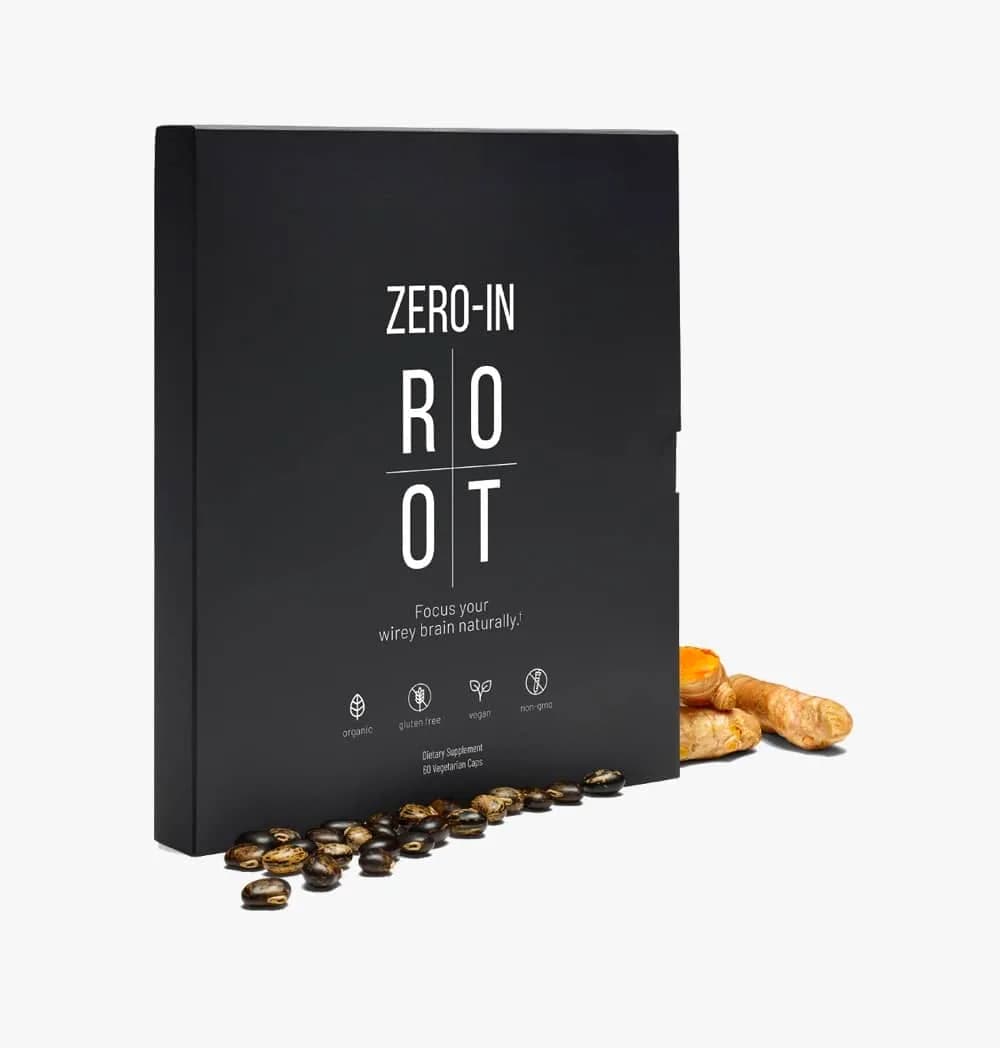
According to its label, Zero-In is a focus supplement in 60 vegetarian capsules, marked gluten-free and vegan. Its ingredients include anhydrous caffeine, L-theanine, N-acetyl-L-tyrosine, pine bark extract, turmeric, velvet bean (mucuna pruriens) extract and vitamin D3. Together, the caffeine and L-theanine pairing, a tyrosine precursor and botanical ingredients aim at an approach that does not rely on a single stimulant. You can read more about the mucuna ingredient in our mucuna pruriens article.
It is not a drug, and the same effect should not be expected in everyone. If you are sensitive to caffeine, use other caffeinated products or already drink a lot of coffee, add up your total. Velvet bean can contain levodopa, so it may interact with antidepressants (especially MAO inhibitors) and Parkinson's medication; if you take medication, ask your doctor before starting. If you are trying it for the first time, do not exceed the label recommendation and watch how you respond over the first few days.
A practical plan for a long session
- Before: sleep well, eat a balanced meal and keep water within reach.
- At the start: if you use a caffeinated product, count it together with your caffeinated drinks for the day.
- During: stand up every hour or two, drink water and have a light snack.
- After: avoid caffeine late at night; your sleep decides tomorrow's performance.
Conclusion
If you want a competitive edge, the first investment is sleep, fluids, movement and regular meals. If you are considering a supplement, choose ingredients with a clear label, known doses and some research behind them, and keep expectations realistic. We cover how to pick a good one separately in our guide to choosing a high-quality nootropic supplement.
Frequently asked questions
What is the best nootropic for gaming?
There is no single best nootropic. The most researched combination is caffeine with L-theanine; the evidence for L-tyrosine, DHA and creatine is limited or situational. Sleep, fluids and regular meals matter more than any supplement.
Do nootropics speed up reflexes and reaction time?
There is no strong evidence that they do so reliably. Caffeine can raise alertness in the short term, but it does not make up for performance lost to sleep deprivation.
How much caffeine a day is safe?
The European Food Safety Authority considers up to 400 mg a day from all sources generally safe for adults and suggests single doses of 200 mg or less. Sensitivity to caffeine varies from person to person.
Who should not use Zero-In?
People who are sensitive to caffeine, are pregnant or nursing, or take antidepressants or Parkinson's medication should speak to a doctor first; velvet bean can contain levodopa.
Are piracetam and similar smart drugs safe?
These substances cannot be sold as food supplements in many countries or require a prescription. Avoid products of unknown origin and talk to a doctor.