How to Choose a High-Quality Nootropic Supplement: A Label-Reading Checklist
When choosing a quality nootropic, look beyond caffeine: amino acids, researched botanicals, a transparent label and quality testing. A checklist you can use before you buy.
By Root Health TürkiyePublished Updated 6 min read

The most practical way to tell a high-quality nootropic from a weak one is to read the label: choose products that list every ingredient and amount clearly, do not lean on caffeine alone, contain ingredients with some research behind them and document quality testing or a manufacturing standard. No formula guarantees mental performance; the aim is to find a transparent, reasonable product and keep expectations realistic.
Five things to check before you buy
Focus and energy products on the market vary widely. Some rely almost entirely on caffeine, while others combine several botanical extracts. The points below help you compare two products side by side.
1. Look beyond caffeine
Caffeine raises alertness for a short time, but on its own it can cause jitters, restlessness and an energy crash in some people. Many formulas pair caffeine with L-theanine; in studies this pair has been linked to favorable changes in attention and mood measures (Haskell et al., 2008; Giesbrecht et al., 2010; review: Camfield et al., 2014). L-theanine occurs naturally in tea leaves; for general information on tea and health see the NCCIH green tea page. The effects are small, but a "caffeine plus a balancer" approach makes sense. Do not forget your total: the European Food Safety Authority considers up to 400 mg of caffeine a day from all sources generally safe for adults; for a general overview of caffeine and behavior see the Smith (2002) review, and for its use in sport see the relevant NIH Office of Dietary Supplements fact sheet.
2. Are there amino acid building blocks?
Amino acids such as tyrosine are building blocks of neurotransmitters including dopamine and norepinephrine. The Jongkees et al. (2015) review reports that tyrosine may support performance especially under stress, sleep loss or heavy cognitive demand, with no clear effect in relaxed conditions. An older study of tyrosine during prolonged wakefulness (Neri et al., 1995) points in a similar direction, and Beaulieu and Gainetdinov (2011) is the standard review of dopamine signaling. So an ingredient like N-acetyl-L-tyrosine makes sense for demanding periods rather than for every day.
3. Check the research behind botanical ingredients
Ingredients such as pine bark extract, turmeric and velvet bean (mucuna pruriens) have been examined for antioxidant and cognitive support. Rohdewald (2002) reviewed the pharmacology of pine bark extract, Pase et al. (2012) its cognitive studies and Hewlings and Kalman (2017) the general properties of curcumin; in addition, Small et al. (2018) studied a bioavailable curcumin on memory and attention measures; results can be encouraging, but the samples are small and the products differ. Treat any label that says a plant "definitely works" with skepticism.
4. Look for balance, not one mechanism
A good formula targets several areas together, such as alertness, focus and mood, rather than just energy. That does not mean every ingredient is individually strong, but an approach that does not depend on a single stimulant is more sensible for sustained use.
5. Quality and transparency
Ingredients are only part of the equation. Manufacturing standards, ingredient sourcing, independent lab testing and clear amounts on the label determine consistency. Because supplements are not regulated like medicines, it is up to you to look for these documents. The logic in our guide to choosing a collagen supplement applies here as a general quality framework.
A checklist
| Criterion | Why it matters | Where to look on the label |
|---|---|---|
| Caffeine amount | To stay under the daily limit and add up other sources. | The mg value per serving. |
| Balancing ingredients | May be more balanced than formulas that lean on caffeine alone. | Ingredients such as L-theanine and their amounts. |
| Amino acids | Neurotransmitter building blocks; benefit depends on the situation. | Names such as N-acetyl-L-tyrosine and their gram values. |
| Botanical extracts | Extracts with research behind them are easier to judge. | Standardized extract ratio and botanical name. |
| Quality and testing | Supports that the contents match the label. | Third-party testing, manufacturing-standard certificate. |
| Transparency | Hidden "proprietary blends" make the dose unknowable. | The individual amount of every ingredient. |
One example: Zero-In
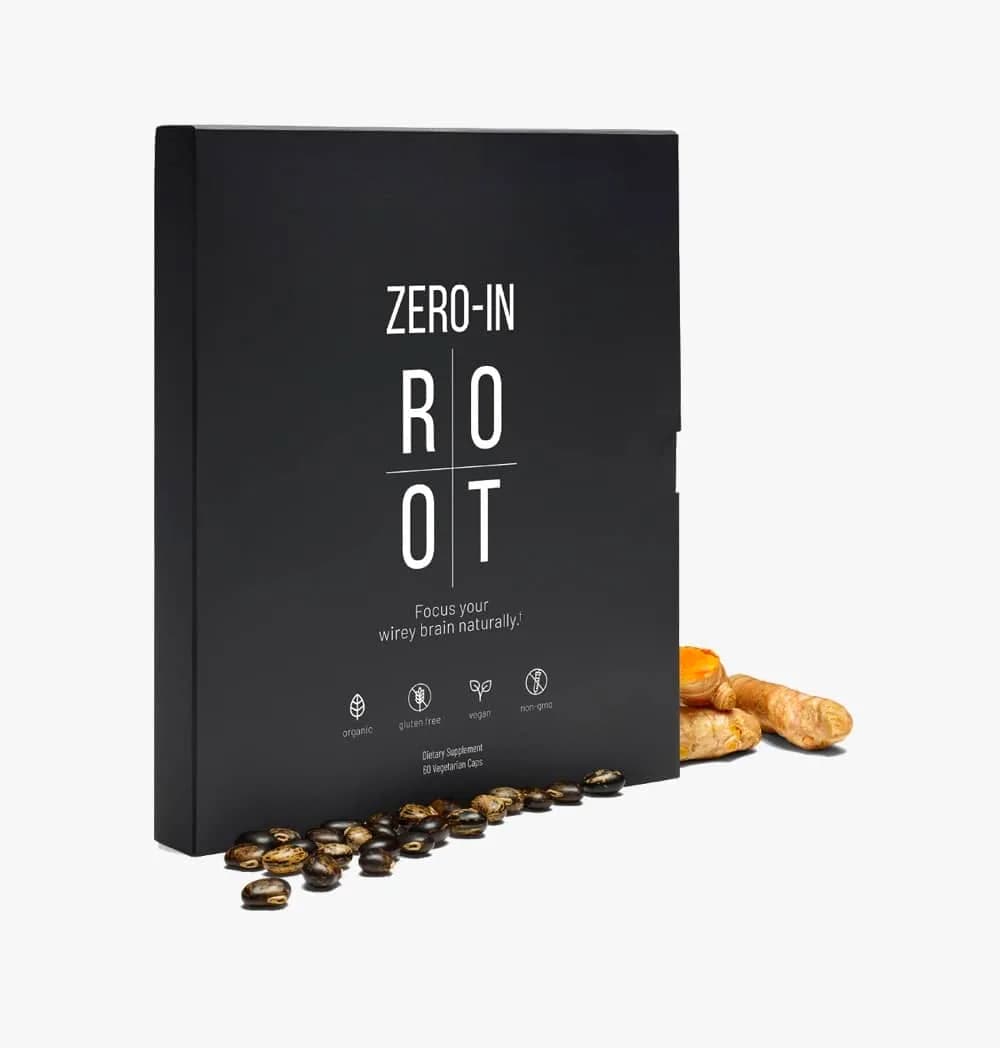
If you want to see these criteria applied to one product, the label of Zero-In lists, in 60 capsules, anhydrous caffeine, L-theanine, N-acetyl-L-tyrosine, pine bark extract, turmeric extract, velvet bean extract and vitamin D3 (see the NIH fact sheet for vitamin D's general role). So caffeine with L-theanine, a tyrosine precursor and various botanical ingredients sit in a single formula. It is not a drug and may not suit everyone; if you are sensitive to caffeine, take medication (velvet bean can contain levodopa and may interact with some drugs), or are pregnant or nursing, ask a doctor first. We look at how a gamer might think about this in our article on nootropics for gaming.
A long-term view and realistic expectations
A nootropic does not replace sleep, nutrition, movement and stress management. When trying a new product, change one thing at a time, stay within the label amount and note how you feel over a few weeks. If you see no clear difference, stopping or switching is reasonable. If you have constant fatigue, trouble concentrating or memory problems, the answer is a doctor's evaluation, not a supplement; for possible causes of such complaints, see our article on brain fog.
Common mistakes
- Assuming "more ingredients means better"; amount and quality matter.
- Adding up caffeine from several products.
- Trusting proprietary blends that give no amounts.
- Turning to prescription or unknown "smart drugs" as a beginner.
Sources
- Giesbrecht T et al. (2010), Nutritional Neuroscience 13(6):283-290.
- Haskell CF et al. (2008), Biological Psychology 77(2):113-122.
- EFSA NDA Panel (2011), opinion on health claims for caffeine and alertness and attention, EFSA Journal 9(4):2054.
- Jongkees BJ et al. (2015), Journal of Psychiatric Research 70:50-57.
- Neri DF et al. (1995), Aviation, Space, and Environmental Medicine 66(4):313-319.
- Pase MP et al. (2012), Journal of Experimental Pharmacology 4:1-8.
- Rohdewald P (2002), International Journal of Clinical Pharmacology and Therapeutics 40(4):158-168.
- Hewlings SJ, Kalman DS (2017), Foods 6(10):92.
- Small GW et al. (2018), American Journal of Geriatric Psychiatry 26(3):266-277.
- Beaulieu JM, Gainetdinov RR (2011), Pharmacological Reviews 63(1):182-217.
- NIH Office of Dietary Supplements, vitamin D fact sheet
- NCCIH, green tea and health
- NIH Office of Dietary Supplements, dietary supplements for exercise and athletic performance
- Smith AP (2002), Food and Chemical Toxicology 40(9):1243-1255.
- Camfield DA et al. (2014), Nutrients 6(11):4495-4519.
Conclusion
The right nootropic depends on your personal goals and tolerance. Some people prefer formulas without stimulants, others want an immediate lift. Understanding which ingredient is there and why is the most reliable route to an informed choice; keep a supplement beside sleep and a balanced diet, not in place of them.
Frequently asked questions
What should I check first on a quality nootropic?
Look for a label that lists every ingredient and amount, a formula that does not lean on caffeine alone, and a quality test or manufacturing-standard document.
Does a nootropic supplement have to contain caffeine?
No. Some formulas contain no stimulant, while others pair caffeine with L-theanine. The choice depends on your goal and your sensitivity to caffeine.
Does more ingredients mean higher quality?
No. Amount, quality and transparency matter more than ingredient count; avoid proprietary blends that give no amounts.
When should I stop a nootropic supplement?
If you see no difference after several weeks of regular use, or you notice palpitations, restlessness or poor sleep, it is reasonable to stop and, if needed, talk to a doctor.
Can nootropics interact with medication?
They can. For example, velvet bean can contain levodopa and may interact with antidepressants or Parkinson's medication. If you take medication, ask your doctor before starting.