Why Zinc Matters for Gut Health and Digestion
How is zinc linked with gut health, barrier integrity, digestive enzymes and immunity? Daily needs, food sources, the upper limit and supplement forms are covered here.
By Root Health TürkiyePublished Updated 5 min read
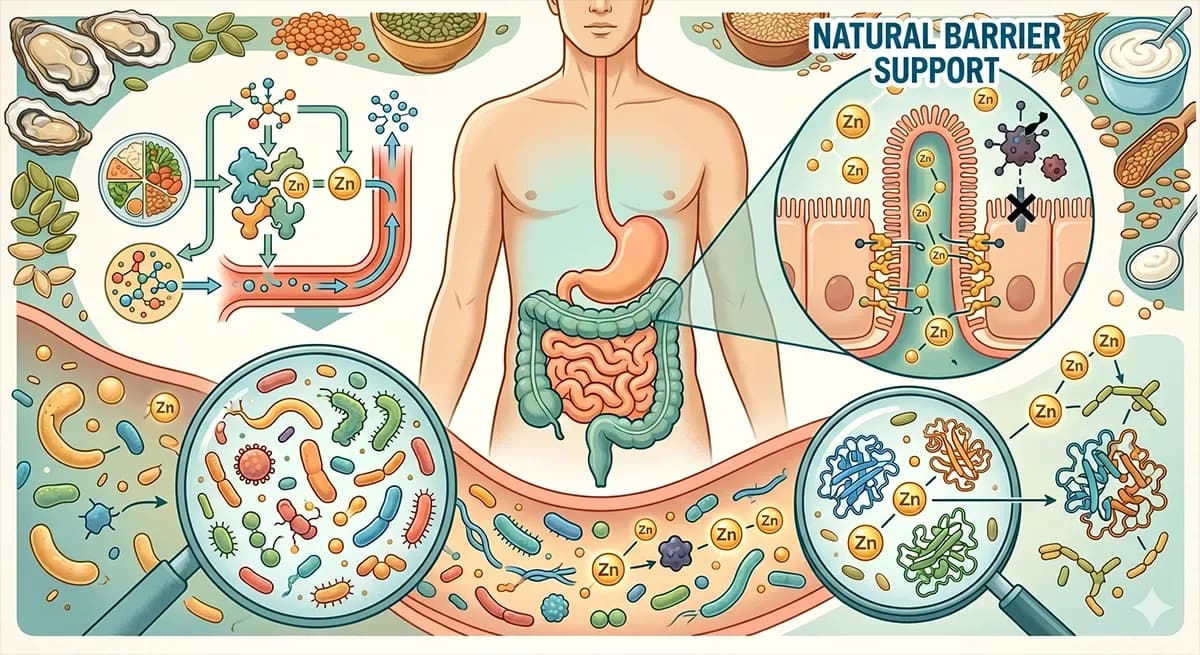
Zinc is an essential trace element needed for the renewal of gut cells, the integrity of the tight junctions in the intestinal lining, digestive enzymes and the work of immune cells. Getting enough zinc is part of gut health, but more is not better, because long-term high doses can interfere with copper absorption. For adults, the US National Institutes of Health (NIH) gives a recommended daily intake of 11 mg for men and 8 mg for women.
What is zinc and what does it do in the body?
Zinc is a mineral required for the work of hundreds of enzymes, protein synthesis, cell division and immune function. Because the body does not store zinc, it must come from the diet regularly. For general information on the ingredient, see our page on zinc.
The gut barrier and zinc
The intestinal lining is a single-cell-thick layer that takes up nutrients while limiting the passage of unwanted substances. "Tight junction" proteins between cells regulate that passage. Laboratory and clinical work has shown that zinc status may be related to the integrity of these junctions (Skrovanek et al., 2014; Sturniolo et al., 2001). That does not mean zinc supplements will reduce gut permeability in everyone, though; part of the research was done in cell culture or in specific patient groups.
Repair, enzymes and stomach acid
The gut lining renews quickly, and cell division and protein synthesis depend on zinc. Zinc is also part of the structure of some digestive enzymes and is linked with stomach acid production. It is therefore thought that severe zinc deficiency can affect digestion and nutrient absorption. Outside of deficiency, it cannot be guaranteed that supplements will improve digestion.
The microbiome: balance matters
The gut microbiome consists of trillions of microorganisms, and zinc is needed by both the host and the microbes. Studies suggest that changes in zinc status may be related to microbiome composition, while very high doses have also been reported to disturb microbial balance. Dietary variety matters more for a diverse microbiome, which we cover in our article on why your gut microbiome loves variety.
Immunity and childhood diarrhea
A significant share of immune cells sit in gut-associated tissue, and zinc is needed for their function (Wessels et al., 2017). One of zinc's best-documented clinical uses is childhood diarrhea: the World Health Organization recommends zinc supplements alongside oral rehydration solution for children with diarrhea. This is a medical practice whose dose and duration are set by a health professional, and it should not be read as self-treatment for adults.
Inflammatory bowel conditions and zinc
In conditions such as Crohn's disease and ulcerative colitis, some nutrient deficiencies, including zinc, can occur because of malabsorption and low intake. Decisions about supplements in these conditions depend on the course of the disease and the medicines used, so they should be made with a gastroenterologist or dietitian. Zinc is not a treatment for these conditions.
Stress and zinc
Chronic stress can affect digestive movement and gut function. The relationship between zinc status and stress is complex, and carrying animal findings over to people calls for caution. In practice, sleep, regular meals and a balanced diet are the safest ways to protect zinc status indirectly too.
Zinc-rich foods
- Oysters and other shellfish
- Beef, turkey and other meats
- Pumpkin seeds, sesame and cashews
- Chickpeas, lentils and other legumes
- Yogurt, cheese and eggs
Phytates in plant sources can reduce zinc absorption; soaking, sprouting or fermenting legumes and grains eases this effect. Vegetarians may need somewhat more.
Supplement forms and safety
Forms on the market include zinc bisglycinate, picolinate, citrate, gluconate and zinc carnosine. Zinc carnosine has been examined in a few studies on the lining of the stomach and small intestine (Mahmood et al., 2007), but that does not mean it benefits everyone. For safety, the NIH gives the tolerable upper intake level for adults as 40 mg a day. Consistently exceeding it can lead to copper deficiency, nausea and impaired immune function. Zinc supplements can also interact with some antibiotics; if you take medication, ask your doctor or pharmacist.
Where does Natural Barrier Support fit?
According to Root, Natural Barrier Support contains zinc as part of a multi-ingredient formula. Rely on the label on the product page for the ingredient list and amount per serving, and add up your total zinc intake from food and other supplements. The product is not a treatment for any bowel condition; if you are pregnant, nursing, have a chronic condition or take medication, talk to a doctor first.
Practical summary
- Aim first to get enough zinc from food.
- If you have persistent diarrhea, weight loss or marked digestive complaints, see a doctor; a supplement is no substitute.
- With zinc supplements, keep total daily intake below 40 mg.
- Increase fiber and plant variety for the microbiome; products such as Relive Greens are only a supporting option.
Sources
The sources below are taken from the bibliography in Root's article; they have not been re-verified on this page.
- Skrovanek S et al. (2014), World Journal of Gastrointestinal Pathophysiology 5(4):496-513: zinc and gastrointestinal disease.
- Sturniolo GC et al. (2001), Inflammatory Bowel Diseases 7(2):94-98.
- Wessels I, Maywald M, Rink L (2017), Nutrients 9(12):1286: zinc as a gatekeeper of immune function.
- Kambe T et al. (2015), Journal of Trace Elements in Medicine and Biology 31:158-162.
- World Health Organization: zinc supplementation in the management of diarrhoea.
- US National Institutes of Health, Office of Dietary Supplements: zinc fact sheet for health professionals.
- Roselli M et al. (2003), Journal of Nutrition 133(12):4077-4082.
- Mahmood A et al. (2007), Gut 56(2):168-175: zinc carnosine and small intestinal integrity.
Conclusion
Zinc is a necessary but not sufficient piece of gut health. Aim for balanced intake from food, do not exceed the upper limit with supplements, and have persistent digestive complaints assessed by a doctor.
Frequently asked questions
How does zinc help gut health?
Zinc is needed for the renewal of gut cells, the tight junctions between them, some digestive enzymes and the function of immune cells. Enough intake is part of healthy gut function but not a solution on its own.
How much zinc should I take a day?
The NIH recommends 11 mg a day for adult men and 8 mg for women. The tolerable upper limit from supplements is 40 mg a day; consistently exceeding it can cause problems such as copper deficiency.
Which foods are richest in zinc?
Oysters, beef, turkey, pumpkin seeds, chickpeas and other legumes, yogurt, cheese and eggs are good sources. Phytates in plant sources can reduce absorption.
Does zinc cure leaky gut?
No. A link between zinc and the gut barrier is being researched, but zinc is not a treatment for any disease. See a doctor for persistent digestive complaints.
Does Natural Barrier Support contain zinc?
According to Root it contains zinc as part of a multi-ingredient formula. See the label on the product page for the ingredient list and amounts.
References
- Wessels I, Maywald M, Rink L (2017), Nutrients 9(12):1286: zinc as a gatekeeper of immune function.
- World Health Organization: zinc supplementation in the management of diarrhoea.
- US National Institutes of Health, Office of Dietary Supplements: zinc fact sheet for health professionals.
- Mahmood A et al. (2007), Gut 56(2):168-175: zinc carnosine and small intestinal integrity.