Better Health Isn't a Hack: Five Habits That Still Matter
New wellness trends come and go, but five simple habits keep standing the test of time: slowing down through mindfulness, prioritising sleep, eating real food, moving your body and reducing everyday environmental exposures. None of them is glamorous, and consistency matters more than perfection. This article walks through the five habits, with practical ideas for each.
By Root Health TürkiyePublished Updated 8 min read
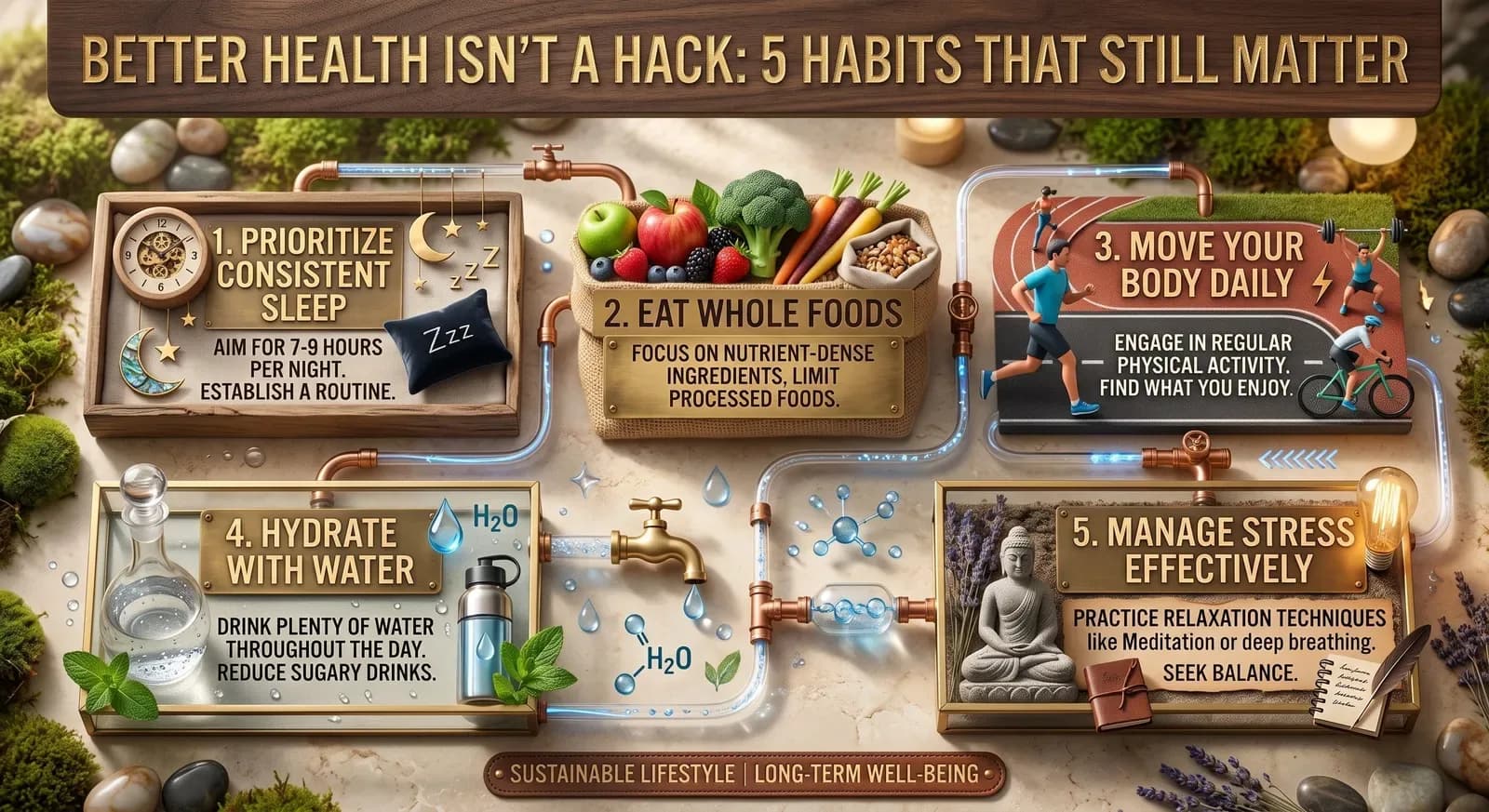
New wellness trends come and go, but five simple habits keep standing the test of time: slowing down through mindfulness, prioritising sleep, eating real food, moving your body and reducing everyday environmental exposures. None of them is glamorous, and consistency matters more than perfection. This article walks through the five habits, with practical ideas for each.
A new diet. A new wearable. A new morning routine. A new supplement. A new “biohack” promising to change everything.
But some of the most important things we can do for our health aren't new at all.
Harvard Health recently highlighted five remarkably simple habits that continue to stand the test of time: practicing mindfulness, prioritizing sleep, eating real food, moving your body, and reducing everyday environmental exposures.
None of them are particularly flashy.
And that may be exactly the point.
At ROOT, we believe supplements should never replace the fundamentals. They should support them. Because lasting wellness isn't usually built around one product, one diet, or one 30-day challenge.
It's built around what you consistently do.
1. Give Your Brain a Chance to Slow Down
We live in a world that rarely shuts off.
Emails. Texts. Meetings. Social media. Work. Kids. Notifications. News.
Our brains weren't designed to process an endless stream of stimulation without recovery.
Mindfulness doesn't necessarily mean sitting cross-legged for an hour. It can be as simple as taking a walk without your phone, concentrating on your breathing for a few minutes, eating without staring at a screen, or simply being fully present with your family.
Research reviewed by the National Center for Complementary and Integrative Health suggests mindfulness practices may help reduce stress and anxiety and may improve sleep quality.
That makes mental wellness less about escaping your life and more about learning how to be present in it.
Where ROOT can support the routine
This is where Zero-In can fit into a daily wellness routine.
ROOT describes Zero-In as a formula designed to support focus, concentration, mental clarity, and cognitive performance. Its formula includes ingredients such as turmeric, pine bark, velvet bean seed, and vitamin D.
Think of it this way:
Mindfulness is the habit. Zero-In is nutritional support for the routine.
Because the goal shouldn't always be doing more.
Sometimes it's being more present for what you're already doing.
2. Stop Treating Sleep Like Wasted Time
We tend to brag about functioning on five hours of sleep.
Your biology isn't nearly as impressed.
Sleep is when many critical processes related to recovery, cognition, immune function, metabolism, and overall well-being take place. Harvard notes that sufficient, restful sleep supports physical and mental health, memory, judgment, cognitive function, and immune health.
The CDC recommends that adults ages 18 to 60 generally get seven or more hours of sleep per night, with recommendations varying somewhat as we age.
But sleep isn't only about the number on the clock.
Consistency matters.
Try going to bed and waking at approximately the same time, reducing late-night screen exposure, limiting caffeine later in the day, and creating a bedroom environment that actually encourages sleep.
Your morning routine may begin the night before.
The ROOT connection
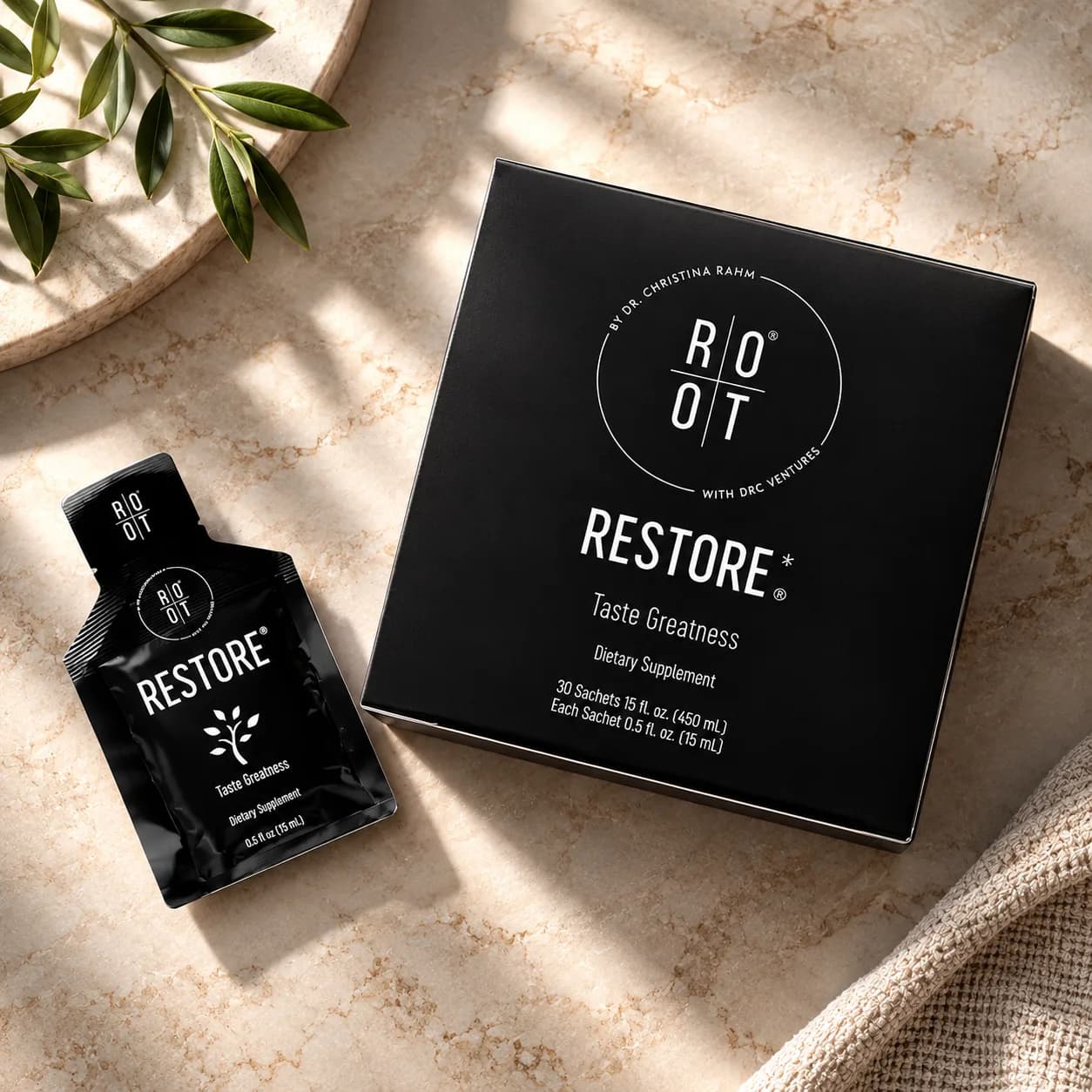
Restore is designed to provide nutrients and antioxidants that support energy and overall wellness as part of an active lifestyle.
That doesn't make Restore a substitute for sleep.
Nothing should be.
Instead, think about the combination:
Sleep provides recovery. Nutrition provides resources. Healthy routines provide consistency.
That's a much stronger foundation than trying to out-supplement four hours of sleep.
3. Eat Food Your Body Recognizes
Nutrition has become unnecessarily complicated.
Keto.
Carnivore.
Vegan.
Low-carb.
Low-fat.
Fasting.
Macro tracking.
There can be appropriate reasons for different nutritional approaches, but underneath nearly all of the noise remains a surprisingly simple principle:
Eat more nutrient-dense, minimally processed food.
The World Health Organization recommends a varied diet emphasizing foods including vegetables, fruits, legumes, whole grains, nuts, seeds, and appropriate protein sources while limiting excessive free sugars, sodium, unhealthy fats, and highly processed foods.
That doesn't require perfection.
Start by looking at what is actually on your plate.
Could you add another vegetable?
Could you replace one packaged snack with fruit?
Could you drink water instead of another sugary beverage?
Could you cook one additional meal at home this week?
Small decisions repeated hundreds of times become a lifestyle.
Where ROOT can help support nutrition
Restore was formulated as a convenient daily wellness product containing selected nutrients and antioxidants designed to support energy and overall wellness.
RELIVE Greens is another option within the ROOT ecosystem, combining vegetables, fruits, prebiotics, and probiotics as nutritional support.
But remember the order:
Real food first. Foundational nutrition second. Supplements support the foundation.
You can't supplement your way out of consistently poor nutrition.
4. Move More — Even When It Doesn't Feel Like Exercise
One of the biggest misconceptions about exercise is that it only counts when you're in a gym.
Your body doesn't know whether you're on a treadmill or walking your dog.
It knows you're moving.
Current U.S. physical activity guidance recommends adults work toward 150 to 300 minutes of moderate-intensity aerobic activity per week, along with muscle-strengthening activities at least two days per week.
But here's something equally important:
You don't have to go from zero to 150 minutes overnight.
Walk after dinner.
Take the stairs.
Play with your kids.
Lift weights.
Garden.
Bike.
Go hiking.
Take a walking meeting instead of another seated Zoom call.
The goal isn't simply to "exercise."
The goal is to build a body that continues to move.
Supporting an active lifestyle
This is another area where Restore naturally fits into the ROOT philosophy because it is specifically positioned to support energy and overall wellness for an active lifestyle.
Movement creates the stimulus.
Nutrition supplies the body.
Recovery allows you to do it again.
Repeat that process long enough and it becomes something far more valuable than a workout program.
It becomes a lifestyle.
5. Pay Attention to What You're Exposed To
This may be the habit people think about the least.
Modern life exposes us to air pollution, smoke, plastics, PFAS and numerous environmental contaminants.
Harvard specifically points to reducing exposure to pollutants, microplastics, and certain chemicals as another practical component of long-term wellness.
The EPA reports that small particulate pollution can penetrate deeply into the lungs and that some particles may enter the bloodstream. Particle pollution has been associated with cardiovascular and respiratory effects, including aggravated asthma, decreased lung function and other health problems.
We can't eliminate every environmental exposure.
But we can reduce some of them.
Use appropriate water filtration.
Reduce unnecessary plastic food storage when practical.
Improve indoor air filtration.
Vent your kitchen while cooking.
Pay attention to local air quality.
And become more conscious about the environment you're creating inside your home.
This is where Clean Slate fits into the ROOT philosophy
ROOT developed Clean Slate around the concept of supporting the body's natural cleansing processes. Its formula combines bioavailable silica sourced from nature, trace minerals, and vitamin C using ROOT's proprietary formulation approach.
Importantly, reducing exposure should still come first.
Think:
Reduce what you can. Support your body's normal processes. Repeat consistently.
Health Is Built From the ROOT Up
There is a reason these habits keep appearing in medical and wellness conversations.
They aren't trends.
They are foundations.
Be present. Sleep. Eat real food. Move your body. Reduce unnecessary exposures.
Then look at where targeted nutritional support may complement those habits.
That's also a useful way to think about the ROOT ecosystem.
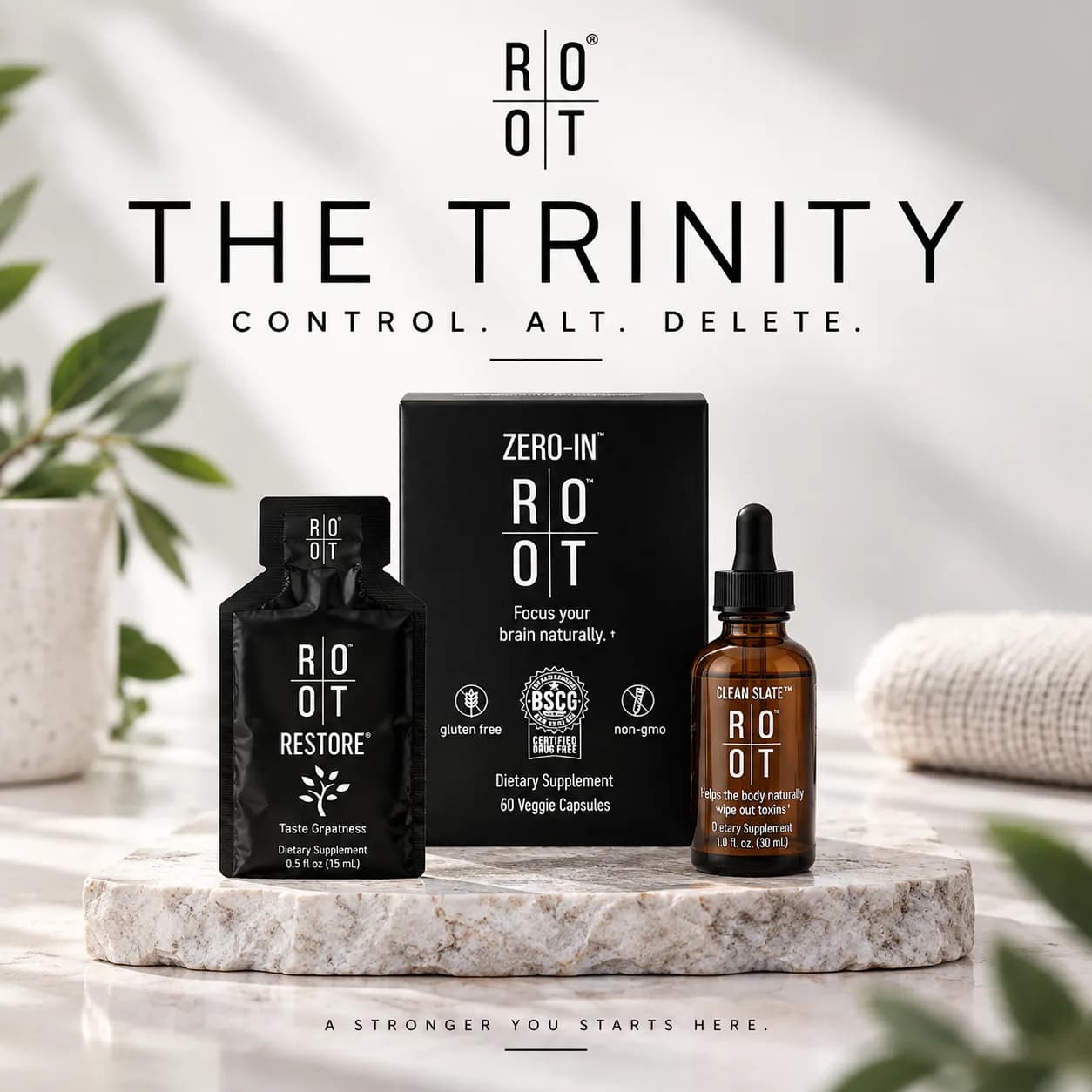
Clean Slate supports the cleansing side of the wellness routine.
Restore supports nutrition, energy, and overall wellness.
Zero-In supports focus, clarity, and cognitive performance.
Together, ROOT refers to these three products as the Trinity Pack, its foundational wellness system designed around cleansing, restoring, and focus.
But products aren't the entire story.
You still need to sleep.
You still need to move.
You still need to eat well.
You still need to manage stress.
You still need to pay attention to your environment.
Because better health isn't something you suddenly discover.
It's something you build, one decision at a time.
And the strongest health journey is usually the one built from the ROOT up.
Medical & Scientific References
Harvard Health Publishing. “5 Timeless Habits for Better Health.” Reviewed by Wynne Armand, MD. September 24, 2025.
National Center for Complementary and Integrative Health (NCCIH). Research summaries on stress, meditation, mindfulness, and sleep.
Centers for Disease Control and Prevention. “About Sleep.” Adult sleep-duration recommendations and healthy-sleep guidance.
U.S. Department of Health and Human Services, Office of Disease Prevention and Health Promotion.Physical Activity Guidelines for Americans. Adults are advised to obtain 150–300 minutes of moderate-intensity aerobic activity weekly and muscle-strengthening activity at least two days per week.
World Health Organization. “Healthy Diet.” Guidance emphasizing fruits, vegetables, legumes, whole grains, nuts, seeds, and other nutrient-dense foods while limiting excess sugars, sodium, unhealthy fats, and highly processed foods.
U.S. Environmental Protection Agency. “Health and Environmental Effects of Particulate Matter.” Information regarding respiratory and cardiovascular effects associated with particulate air pollution.
Related topics: Trinity Pack.
Frequently asked questions
Which habits matter most for health?
Mindfulness, sleep, eating real food, regular movement and reducing environmental exposures are widely recommended basics.
Do I need to change everything at once?
No. Start with one habit and build consistently; steady changes tend to last longer.
Where do supplements fit?
They are optional support and do not replace the basics; speak to a doctor if you have a condition or take medication.