Bovine Collagen and Colostrum in Pregnancy and After Birth: What Has Actually Been Studied?
Bovine collagen supplies amino acids and colostrum supplies immunoglobulins and lactoferrin, yet most research on both was not carried out in pregnant or breastfeeding women. Here is what is known and what to ask your midwife or doctor.
By Root Health TürkiyePublished Updated 5 min read
Bovine collagen and bovine colostrum are two nutritional ingredients many expectant and new mothers ask about: collagen provides amino acids such as glycine, proline and hydroxyproline, while colostrum contains immunoglobulins, lactoferrin and growth factors. Because most of the research on them was not done in pregnant or breastfeeding women, the sensible first step before adding either is a conversation with your midwife, obstetrician or GP.
Why nutrition gets so much attention in these months
During pregnancy the body is effectively working for two. Blood volume rises, the skin over the bump stretches week by week, the lower back and joints carry a new load and digestion slows down. After the birth come broken nights, breastfeeding and the slow work of tissue recovery.
Antenatal care across Europe typically focuses on a short list of nutrients, with folic acid at the top and, depending on the country, vitamin D and iron. Collagen and colostrum are not on that standard list; they tend to come up when mothers do their own reading. Below we look at the studies ROOT highlights on the topic and, just as importantly, at what those studies can and cannot tell us.
Bovine collagen: what it is and what researchers looked at
Collagen is the most abundant structural protein in the human body. The bovine collagen used in supplements comes from cattle hide and is usually hydrolysed, meaning it has been broken down into small peptides that dissolve easily in drinks. The studies cited by ROOT fall into four areas:
- Skin: a dermatology study from 2014 (reference 1) measured skin moisture and elasticity in people taking collagen peptides. Stretching skin over the abdomen is the main reason this topic interests pregnant women.
- Joints: a 2008 paper (reference 2) examined collagen hydrolysate and joint discomfort. With extra weight in late pregnancy, joint comfort is a common question.
- Gut: research published in Nutrients (reference 3) explored collagen peptides and markers of the intestinal barrier.
- Recovery: a sports nutrition study (reference 4) looked at collagen intake, muscle recovery after exercise and perceived soreness.
Keep in mind that these studies involved groups such as athletes and middle-aged adults. Nobody has yet shown that the findings transfer directly to pregnancy or the postnatal period.
Bovine colostrum: the first milk
Colostrum is the thick, yellowish milk a cow produces in the first days after calving. It has a long culinary history in Europe too: in parts of Britain it was known as "beestings" and baked into puddings, and German speakers call it Biestmilch. Supplements use a dried powder. The colostrum research mentioned by ROOT covers:
- Immune-related components: a 2015 review (reference 5) describes the immunoglobulins and lactoferrin found in bovine colostrum.
- Nutrient profile: a food science paper (reference 6) analysed its protein, vitamin and mineral composition.
- Digestive tract: an article in Frontiers in Immunology (reference 7) discusses colostrum in relation to gut health.
- Recovery from physical stress: a review (reference 8) considers colostrum supplementation and recovery.
Safety data for colostrum during pregnancy and breastfeeding are limited. As a dairy product it is also unsuitable for anyone with a cow's milk protein allergy.
Both in one formula: ROOT's approach
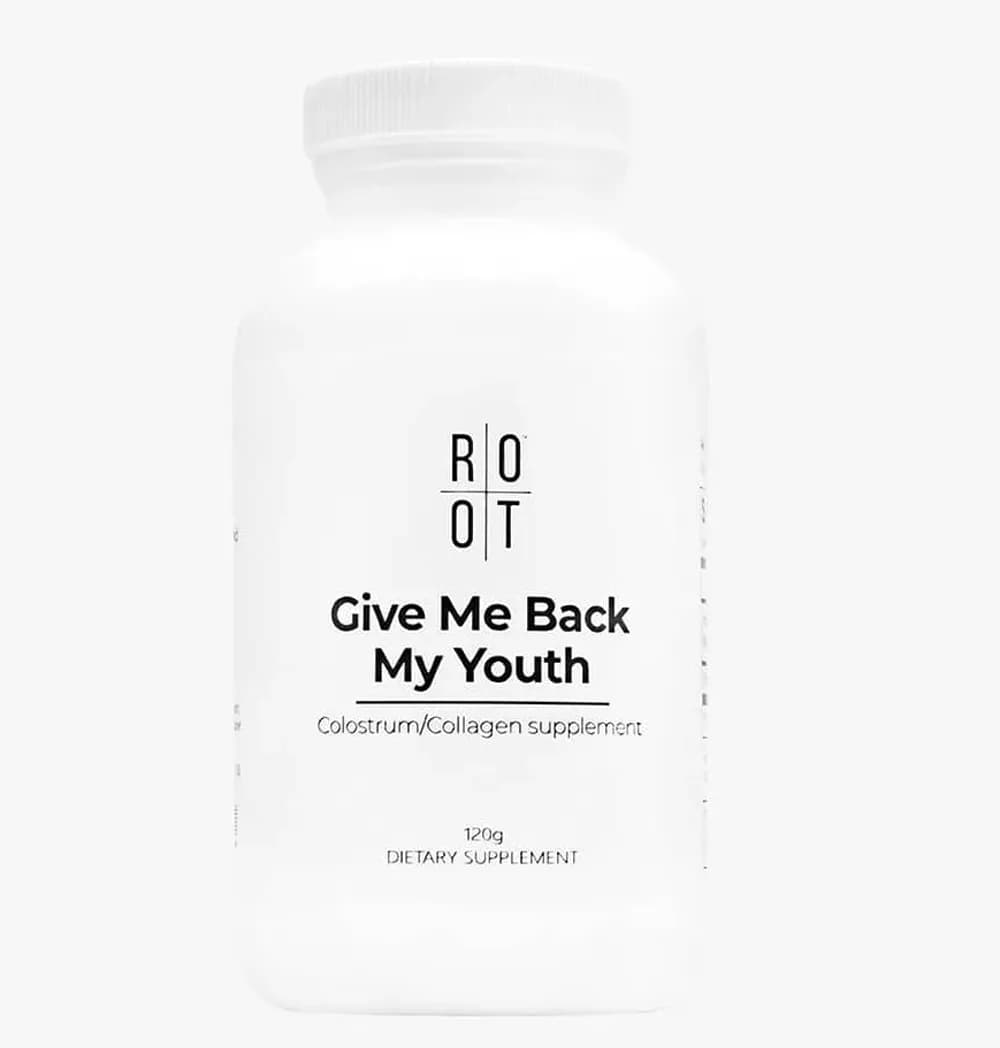
ROOT combines the two ingredients in a single powder, Give Me Back My Youth (GMBMY). The name is a brand/trade name, not a claim. According to the US label, each 4 g serving contains 2 g of hydrolysed bovine collagen and 2 g of whole colostrum powder, and a 120 g tub holds 30 servings; the label suggests roughly two teaspoons a day. The product shipped to the EU may carry an EU-specific label.
ROOT's original article argues that the pair complement each other for skin, joints, digestion and postnatal recovery. However, none of the cited papers tested this combination in pregnant or breastfeeding women, so that idea is best read as a hypothesis rather than an established finding.
If you would like to go further, our comparison of collagen and colostrum explains how the two differ, our piece on pregnancy and postpartum nutrition looks at collagen specifically, and the article on marine collagen versus collagen peptides covers sourcing.
Thinking about it? Questions to take to your next appointment
- Is it appropriate to add a new supplement at this stage of my pregnancy, and could it overlap with the vitamins and minerals I already take?
- Do I have a dairy allergy or intolerance?
- Is anything known about effects on my baby if I use it while breastfeeding?
- Am I already meeting my daily protein needs from food?
Food remains the foundation: eggs, yoghurt, cheese, lentils and beans, fish and slow-cooked broths are familiar protein sources in most European kitchens and fit easily into busy postnatal weeks.
Bottom line
Collagen and colostrum are two ingredients that attract a lot of interest around pregnancy and the postnatal months. The studies ROOT cites explore possible links with skin, joints, the gut and recovery, but because they were not carried out in pregnant or breastfeeding women, any decision is best made together with the professional who looks after your pregnancy.
References
- Proksch, E., et al. (2014). "Collagen Peptides Improve Skin Elasticity and Hydration." Journal of Drugs in Dermatology.
- Clark, K. L., et al. (2008). "Collagen Hydrolysate Improves Joint Pain." Current Medical Research and Opinion.
- Zdzieblo, D., et al. (2018). "Collagen Peptides and Their Effects on Gut Health." Nutrients.
- Aksu, A., et al. (2016). "Effect of Collagen Supplementation on Recovery After Exercise." Journal of the International Society of Sports Nutrition.
- Bovine colostrum: a review. "Journal of Immunology Research," 2015.
- Lussier, B., et al. (2019). "Nutritional Composition of Bovine Colostrum." International Journal of Food Sciences and Nutrition.
- Riva, A., et al. (2020). "The Role of Colostrum in Gut Health." Frontiers in Immunology.
- Gera, M., et al. (2019). "Colostrum Supplementation Enhances Recovery." Nutrition Research Reviews.
Frequently asked questions
Can I take collagen while pregnant?
Collagen is a dietary protein, but research on collagen supplements during pregnancy is very limited. Check with your midwife or doctor first, especially if you already take other vitamins or minerals.
Is bovine colostrum safe while breastfeeding?
There is little safety data on bovine colostrum during pregnancy and breastfeeding. It is a dairy product, so it is not suitable if you have a cow's milk protein allergy. Discuss it with your healthcare professional.
What is in GMBMY?
According to the US label, each 4 g serving contains 2 g of hydrolysed bovine collagen and 2 g of whole colostrum powder. A 120 g tub provides 30 servings, and the label suggests about two teaspoons a day.
Were the studies ROOT cites done in pregnant women?
No. The cited studies looked at skin, joints, the gut and recovery after exercise in other groups. It has not been shown that their results apply directly to pregnancy.