How Much Protein Do You Need? Is More Always Better?
Daily protein needs explained through the RDA and sports nutrition position statements, with the limits of high protein and how to build a balanced plate.
By Root Health TürkiyePublished Updated 5 min read
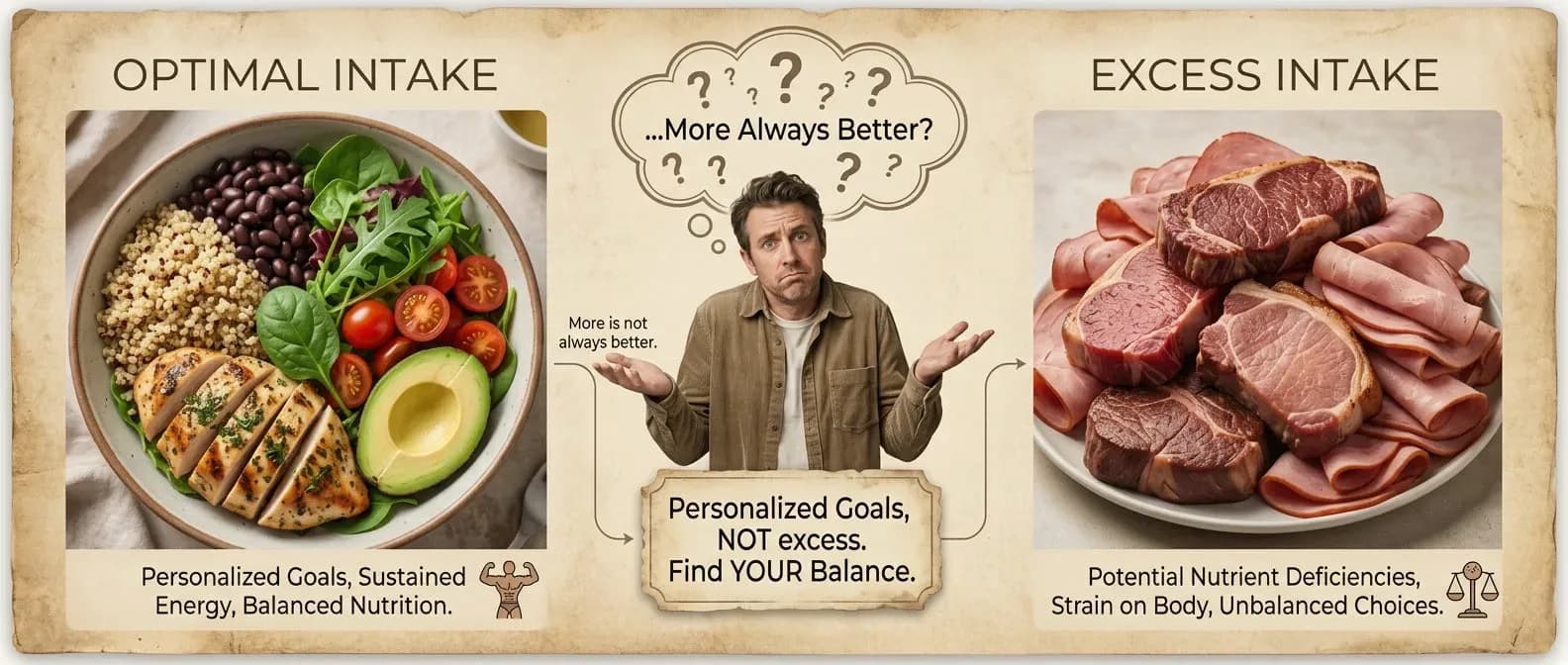
The official protein recommendation (RDA) for healthy adults is 0.8 grams per kilogram of body weight per day, which is about 56 grams for someone weighing 70 kg. For people who train regularly or want to protect muscle, expert position statements suggest ranges up to 1.4 to 2.0 g/kg per day. But more is not always better: protein should not be the only number you read on a label, because a product's protein content says nothing about how balanced or nourishing it is.
Why is everyone talking about protein?
Supermarket shelves now carry protein bars, protein drinks, protein coffee and even protein chips. On social media some call it "proteinmaxxing": trying to fit as much protein as possible into the day. Protein deserves attention, because the body uses it to build and maintain muscle and other tissues and to make compounds such as enzymes and hormones, and protein-containing meals can support a feeling of fullness. The problem is that protein grams get presented as if they were the one measure of a product's quality.
How much protein do you actually need?
There is no single ideal number for everyone. According to a 2017 review in Advances in Nutrition by Wolfe and colleagues, the RDA for adults aged 18 and over, 0.8 g/kg, has stayed essentially unchanged for more than seventy years; the authors argue it may not be the optimal level for many people, that higher intakes could help with matters like muscle maintenance and function, and that the acceptable macronutrient distribution range (10 to 35 percent of energy as protein) reflects this.
The International Society of Sports Nutrition's 2017 position stand recommends 1.4 to 2.0 g/kg per day for healthy, exercising adults, about 0.25 g/kg or 20 to 40 grams of high-quality protein per serving, and spreading protein through the day. During calorie restriction it says some trained people may need higher amounts.
- RDA (0.8 g/kg): about 48 g for 60 kg, 56 g for 70 kg, 64 g for 80 kg and 72 g for 90 kg.
- Active adults (1.4-2.0 g/kg): about 98 to 140 g for 70 kg.
These figures are a general framework. Age, health conditions, pregnancy, breastfeeding and medication can change your needs; people with kidney disease or on medication-based weight management should set the amount with their doctor.
How does high protein relate to weight management?
A 2020 review by Moon and Koh reports that higher-protein eating patterns have been linked to preserving lean mass during weight loss and to favorable shifts in appetite hormones. The same review says that in long trials of 6 to 12 months no adverse effects on bone density or kidney function were seen, and the authors note that trials longer than 12 months would strengthen the evidence. That does not mean the more the better; protein is only one part of weight management, and a falling number on the scale does not by itself show you are healthier. We looked at where collagen fits in does collagen help you lose weight.
The traps of chasing protein
- High-protein but highly processed products: 20 grams of protein on the label does not mean the product is balanced in fiber, vitamins, minerals and healthy fats.
- Missing variety: The body needs carbohydrates, fats, fiber and a wide range of plant foods alongside protein. We discuss this in dietary diversity.
- Leaning on one source: Hitting a protein target mostly with meat and processed meat can lead to an unbalanced plate.
- Making supplements the foundation: Protein powder or amino acid supplements do not replace food; for how to choose, see choosing amino acids for muscle growth and our amino acid supplement comparison.
A smarter plate
- Vary your protein sources: Eggs, fish, poultry, yogurt, legumes, nuts and seeds.
- Spread it across meals: Aim for roughly 20 to 40 g of good-quality protein per meal.
- Add vegetables, fruit and fiber: A variety of plants matters for the gut too; see why your gut microbiome loves variety.
- Use your muscles: Resistance training is as important as protein for keeping muscle.
- Water, sleep and sustainability: Habits you can keep over the long term beat short-term number targets.
If you are curious about protein-containing supplements such as collagen or colostrum, remember they are not complete proteins and do not replace them; hydrolyzed collagen versus collagen peptides is a good place to start.
References
- Wolfe RR, Cifelli AM, Kostas G, Kim IY. Optimizing protein intake in adults: interpretation and application of the Recommended Dietary Allowance compared with the Acceptable Macronutrient Distribution Range. Advances in Nutrition. 2017;8(2):266-275. doi.org/10.3945/an.116.013821.
- Jäger R, Kerksick CM, Campbell BI, et al. International Society of Sports Nutrition position stand: protein and exercise. Journal of the International Society of Sports Nutrition. 2017;14:20. doi.org/10.1186/s12970-017-0177-8.
- Moon J, Koh G. Clinical evidence and mechanisms of high-protein diet-induced weight loss. Journal of Obesity & Metabolic Syndrome. 2020;29(3):166-173. doi.org/10.7570/jomes20028.
Conclusion
Protein is an essential part of healthy eating, but it is not the only measure. Work out the amount that fits your own goals, vary your sources, and look at the whole plate rather than the protein count alone.
Frequently asked questions
How much protein do I need per day?
The RDA for healthy adults is 0.8 g per kg of body weight. For regular exercisers the ISSN suggests 1.4 to 2.0 g/kg; it varies with age, health and goals.
Is more protein always better?
No. Protein is one part of balanced eating; fiber, vitamins, minerals and healthy fats matter too, and a product's protein grams do not show its quality.
How much protein per meal?
The ISSN position stand suggests about 0.25 g/kg or 20 to 40 grams of high-quality protein per meal, spread through the day.
Does a high-protein diet harm the kidneys?
In a review by Moon and Koh, trials of 6 to 12 months showed no adverse effect on kidney function, but people with kidney disease should always set the amount with their doctor.
Do I need protein powder?
No. If food gives you enough protein a supplement is optional; it can be convenient but does not replace food.