Microplastics and the Body: What Is Known and Why Detox Claims Need Caution
How microplastics enter the body, what has been found in human blood, lung and placenta, and where the evidence gaps in "microplastic detox" claims lie.
By Root Health TürkiyePublished Updated 6 min read

Microplastics are plastic particles smaller than 5 mm, and they have been reported in human blood, lung tissue and placenta; however, their effect on health is not yet clear, and no food, supplement or method has been shown to "clear" microplastics from the body. The most defensible scientific approach is therefore to reduce exposure within reason and to support the natural clearance work of the liver and kidneys with healthy habits. This article explains how microplastics enter the body, what research has found, and why "microplastic detox" claims deserve caution.
What are microplastics and where do they come from?
Plastic production has surged since the middle of the 20th century. According to a 2017 analysis by Geyer and colleagues, about 8,300 million metric tons of virgin plastic had been produced to date, and by 2015 roughly 79% of all plastic ever made had accumulated in landfills or the natural environment. Plastics do not biodegrade; sunlight, heat and wear break them into ever smaller pieces. Microplastics are now detected in oceans, soil, drinking water, air and food.
How do they enter the body?
- Ingestion: Food and drink are the main route. Particles can get into food from packaging, during processing and through environmental contamination. A 2019 estimate by Cox and colleagues put US intake from food at about 39,000 to 52,000 particles a year, rising to 74,000 to 121,000 when inhalation is included. People who drink only bottled water were estimated to take in about 90,000 additional particles a year, versus about 4,000 for tap water drinkers. These are estimates that depend on methodological assumptions.
- Inhalation: Fibers shed from synthetic textiles and urban dust can travel through the air.
- Skin contact: Large particles cannot cross an intact skin barrier; how much skin contact contributes to microplastics entering the body is unclear.
What has been found in the human body?
Several studies have shown the presence of microplastics in human tissue: in 2022, Leslie and colleagues measured plastic particles in human blood samples and reported a mean of 1.6 µg/ml for the summed quantifiable concentration. Jenner and colleagues detected microplastics in 11 of 13 lung tissue samples. In 2021, Ragusa and colleagues found 12 microplastic fragments in 4 human placentas. These studies say "present"; they do not by themselves answer "how much and how harmful".
What is known about health effects?
In an observational study by Marfella and colleagues published in the New England Journal of Medicine in 2024, 304 patients undergoing carotid endarterectomy for asymptomatic carotid artery disease were enrolled and 257 completed follow-up. Polyethylene was detected in the excised plaque of 150 patients (58.4%), and those with microplastics in the plaque had a higher risk of the composite of heart attack, stroke or death from any cause over a mean follow-up of 33.7 months (hazard ratio 4.53). This is an association: an observational study cannot prove that microplastics caused those events, and other factors and reverse causation cannot be excluded. The World Health Organization (WHO), in its 2019 report on microplastics in drinking-water, also identified key knowledge gaps and called for more research. In short, particles are found in the body, but the health consequences of everyday exposure levels are still being studied.
Reasonable steps to reduce exposure
Exposure cannot be reduced to zero, but these steps are reasonable, although it has not been separately shown that each one improves health outcomes:
- Cut back on single-use plastic: Prefer a stainless steel or glass bottle for water and glass containers for storage.
- Do not heat food in plastic containers: Heat and wear can increase particle release.
- Consider tap water over bottled water: In Cox and colleagues' estimate, bottled water was a notable extra source. Water quality depends on local conditions; check your municipal water report if you are concerned.
- Favor natural-fiber fabrics: Cotton, wool and linen shed fewer synthetic fibers; washing machine filters are another option.
- Damp-clean the home: Dust is a carrier of indoor particles.
How to read "microplastic detox" claims
Online you will see claims that broccoli sprouts, sulforaphane, spirulina, chlorella, saunas or glutathione-supporting supplements "help remove microplastics". Each of these has been studied in other contexts; sulforaphane, for example, is studied for its effect on cells' own protective enzyme systems. But none of the sources we relied on for this article includes a human study showing that any food, supplement or sauna practice removes microplastics or nanoplastics from the body. Saying a greens powder or any product "clears microplastics" therefore goes beyond the evidence. In the body's natural clearance system, the liver converts substances while the kidneys and gut remove them; how effective these systems are for microplastic particles is not yet clear. For sulforaphane and its food source, you can read our health benefits of broccoli article, which gives a measured summary of the evidence on sulforaphane and carries no claim about microplastics.
Greens powders in this context
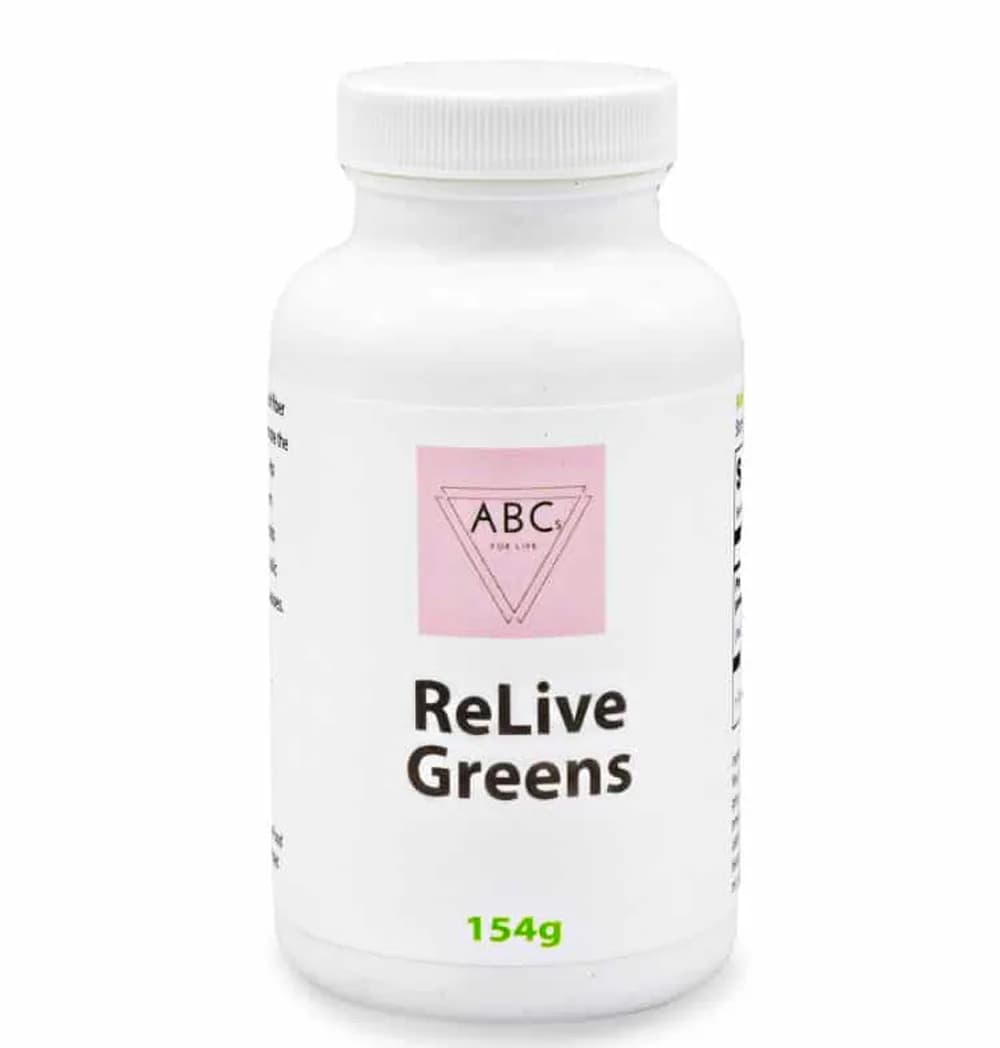
You can find Root's Relive Greens on its product page on our site. Nothing in this article means that Relive Greens or any other product helps remove microplastics. We discuss how to evaluate greens powders in Relive Greens vs. AG1; for general quality criteria see supplement ingredient quality. For plant variety and fiber, why your gut microbiome loves variety may also help.
References
- Geyer R, Jambeck JR, Law KL. Production, use, and fate of all plastics ever made. Sci Adv. 2017;3(7):e1700782. doi.org/10.1126/sciadv.1700782.
- Cox KD, Covernton GA, Davies HL, et al. Human consumption of microplastics. Environ Sci Technol. 2019;53(12):7068-7074. doi.org/10.1021/acs.est.9b01517.
- Leslie HA, van Velzen MJM, Brandsma SH, et al. Discovery and quantification of plastic particle pollution in human blood. Environ Int. 2022;163:107199. doi.org/10.1016/j.envint.2022.107199.
- Jenner LC, Rotchell JM, Bennett RT, et al. Detection of microplastics in human lung tissue using μFTIR spectroscopy. Sci Total Environ. 2022;831:154907. doi.org/10.1016/j.scitotenv.2022.154907.
- Ragusa A, Svelato A, Santacroce C, et al. Plasticenta: first evidence of microplastics in human placenta. Environ Int. 2021;146:106274. doi.org/10.1016/j.envint.2020.106274.
- Marfella R, Prattichizzo F, Sardu C, et al. Microplastics and nanoplastics in atheromas and cardiovascular events. N Engl J Med. 2024;390(10):900-910. doi.org/10.1056/NEJMoa2309822.
- World Health Organization. Microplastics in drinking-water. Geneva: WHO; 2019.
Conclusion
Microplastics are found in human tissue; their health effects are still being researched, and there is no proven detox method to remove them. The reasonable step is to reduce exposure and to support the body's normal functioning with basics such as balanced nutrition, sleep and movement. If you have a specific health concern, see a doctor.
Frequently asked questions
What are microplastics?
Plastic particles smaller than 5 mm. They are detected in oceans, soil, drinking water, air and food.
Are microplastics found in the human body?
Yes. Studies have reported microplastic particles in human blood, lung tissue and placenta. Their health effects are still being researched.
Can microplastics be removed from the body?
Among the sources used here there is no human study showing that any food, supplement or method such as sauna removes microplastics from the body.
How can microplastic exposure be reduced?
Cutting single-use plastic, not heating food in plastic, choosing natural-fiber fabrics and damp-cleaning the home are reasonable steps; their health benefits have not been separately shown.
Do microplastics cause cardiovascular disease?
A 2024 observational study found a higher risk of heart attack, stroke or death in patients with microplastics detected in carotid plaque. That is an association; causation has not been shown.
References
- Geyer et al. 2017, Sci Adv: production, use and fate of all plastics ever made
- Cox et al. 2019, Environ Sci Technol: human consumption of microplastics
- Leslie et al. 2022, Environ Int: plastic particle pollution in human blood
- Jenner et al. 2022, Sci Total Environ: microplastics in human lung tissue
- Ragusa et al. 2021, Environ Int: microplastics in human placenta
- Marfella et al. 2024, N Engl J Med: microplastics and nanoplastics in atheromas
- WHO 2019: microplastics in drinking-water