Prebiotics vs Probiotics: What Is the Difference? A Simple Gut Guide
Prebiotics and probiotics are not the same thing. Here are the definitions, sources, safety notes and whether you need both, in plain language.
By Root Health TürkiyePublished Updated 4 min read
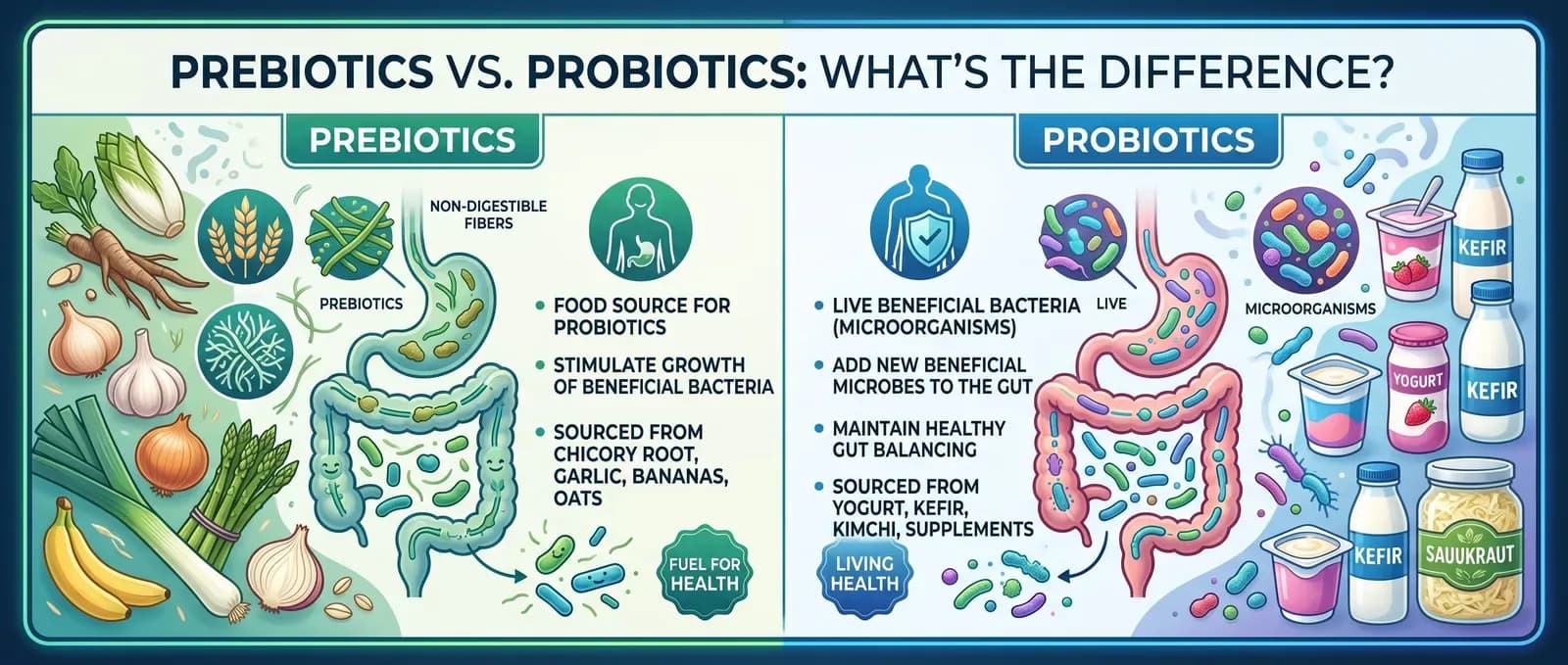
Probiotics are live microorganisms; prebiotics are substances that certain gut microorganisms use as food. In short, a probiotic brings microbes to the gut, while a prebiotic feeds microbes that are already there. Both come up in gut-health conversations, but they are different things, and evidence for one cannot be carried over to the other.
What are probiotics?
The US National Center for Complementary and Integrative Health (NCCIH) describes probiotics as live microorganisms intended to have health benefits when consumed or applied to the body. They are found in fermented foods such as yogurt and kefir and in dietary supplements. The most common types belong to the Lactobacillus and Bifidobacterium groups. The 2014 ISAPP consensus statement likewise reaffirmed the FAO/WHO definition of probiotics as "live microorganisms which, when administered in adequate amounts, confer a health benefit on the host" (Hill et al., 2014).
One detail matters here: probiotics are not interchangeable. Effects are strain-specific, so a result seen with one strain or formulation cannot automatically be applied to another. NCCIH also notes that much remains to be learned about which probiotics help for which purpose, in what amounts and in whom.
What are prebiotics?
The International Scientific Association for Probiotics and Prebiotics (ISAPP) consensus statement defines a prebiotic as a substrate that is selectively utilized by host microorganisms conferring a health benefit (Gibson et al., 2017). In practice this mostly means certain fibers that reach the large intestine undigested, where microbes use them; inulin and galacto-oligosaccharides are well-known examples. Foods such as onion, garlic, leek, oats and banana contain such compounds.
Prebiotics vs probiotics at a glance
| Prebiotics | Probiotics | |
|---|---|---|
| What are they? | Substrates used by certain gut microbes | Live microorganisms |
| What do they do? | Selectively feed the existing microbiota | Add specific microorganisms |
| Sources | Fiber-rich foods and some ingredients | Fermented foods and supplements |
| Watch for | Not every fiber is a prebiotic | Varies by strain and product |
Why does fiber matter so much?
Some dietary fibers reach the large intestine and are fermented by microbes. How different fibers shape microbial composition and the compounds microbes produce is still being studied. The point to underline is that not every fiber counts as a prebiotic in the technical sense, and responses differ from person to person. That is why taking fiber from many different plant foods is a sturdier strategy than chasing a single ingredient. We explore variety in the article on why your gut microbiome loves variety; for zinc and gut integrity, see our zinc article.
Do you need both?
There is no single answer for everyone. Your diet, microbiome, health status and needs differ from someone else's. Probiotic research is promising in some areas, but the evidence varies a great deal with the type of probiotic and the purpose of use.
For many healthy people a realistic starting point is this:
- Eat fiber from different plant foods every day: legumes, vegetables, fruit, whole grains, seeds.
- Add fermented foods such as yogurt, kefir and pickles naturally.
- If you consider a supplement, look on the label for the strain name, the amount and who tested the product.
Safety notes
NCCIH reports that probiotics may carry a risk of serious infection in people with weakened immune systems, in the seriously ill and in premature infants. If you have an immune problem or a chronic condition, or you are pregnant or nursing, talk to your doctor before taking a probiotic supplement. Raising prebiotic fiber too quickly can cause gas and bloating.
An ecosystem, not a quick fix
Gut health has become a big wellness category, and it is tempting to look for one ingredient that will "fix" everything. The microbiome does not work that way; it is a dynamic ecosystem shaped by diet and many other factors. Your habits say more than any single product can.
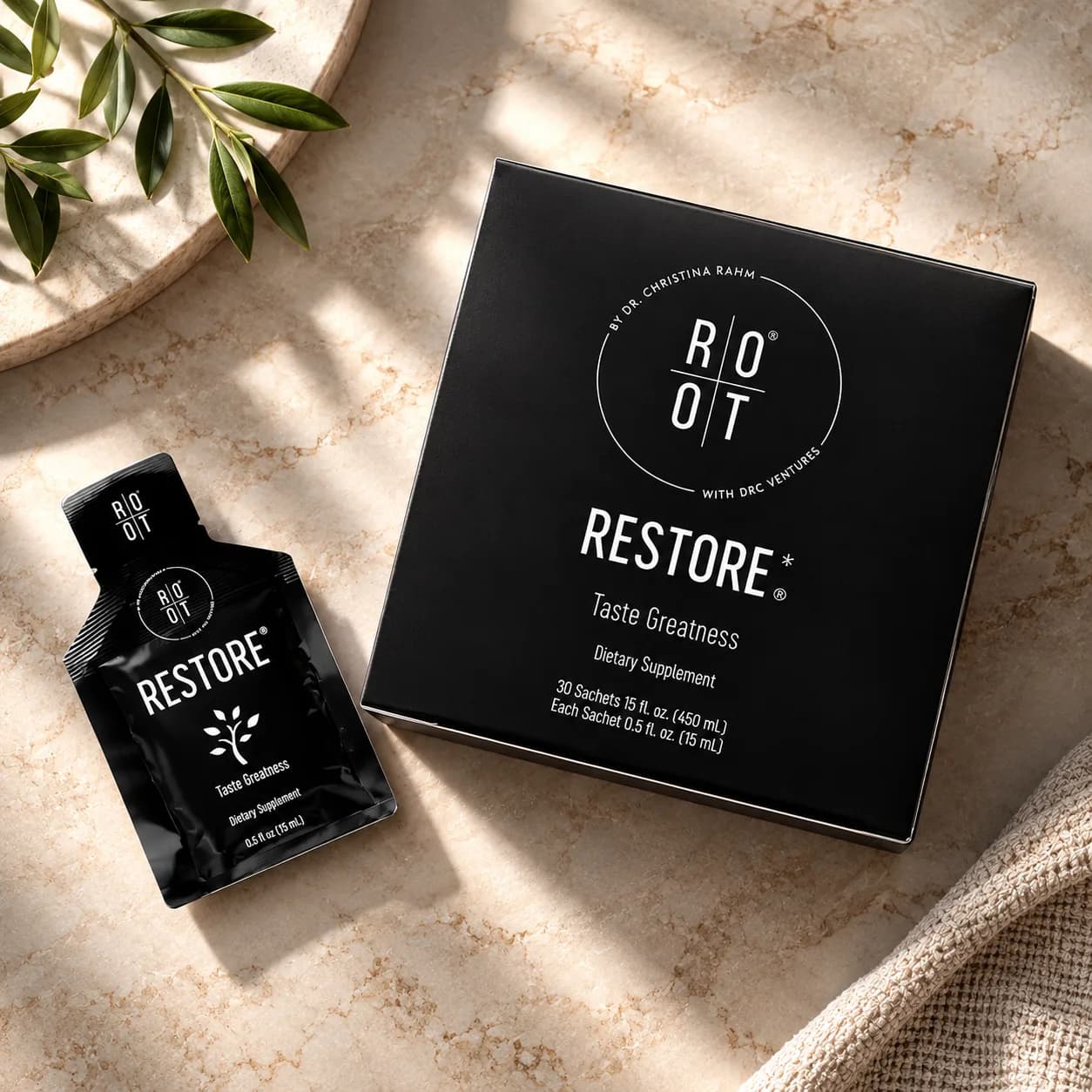
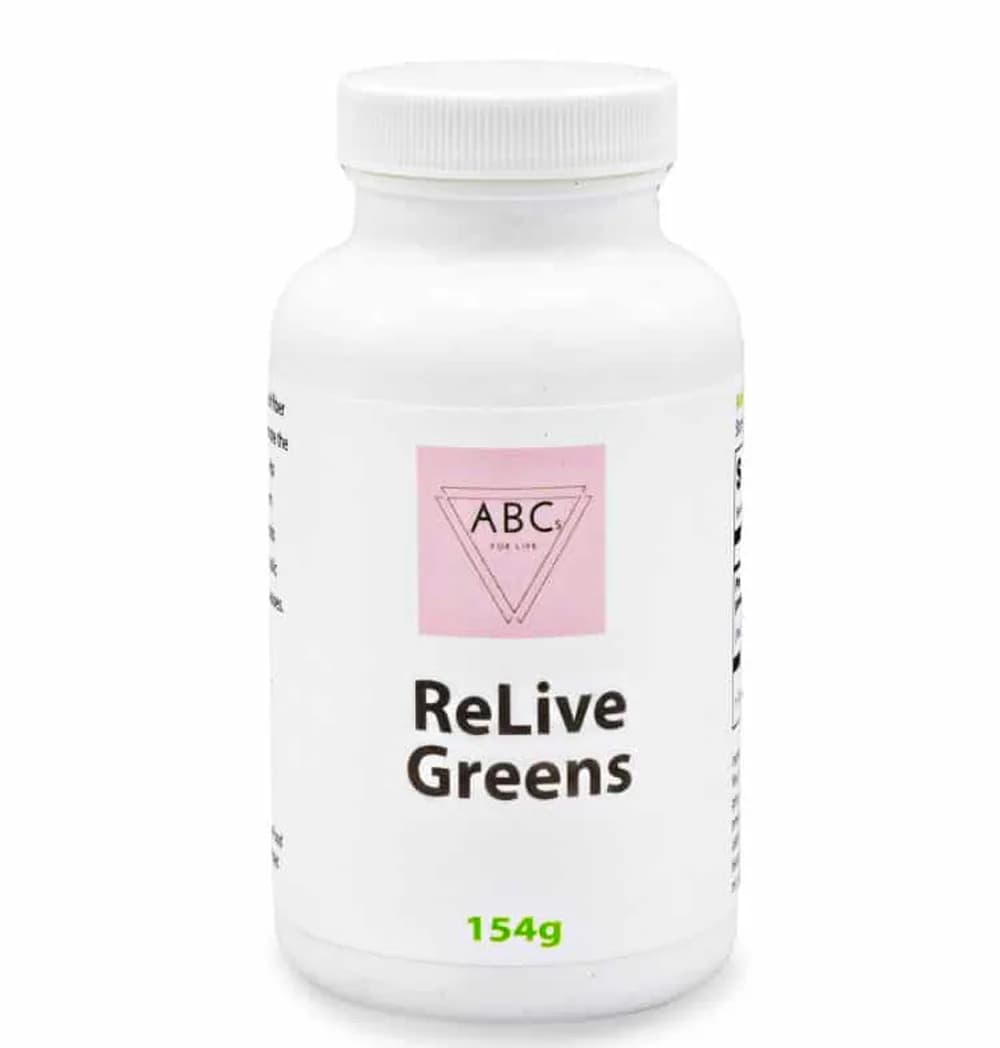
If you want to add gut-focused support to your daily routine, Root's Restore is one option for a gut routine; rely on the label on the product page for ingredients, amounts and use. For a fiber source, the published ingredient list of Relive Greens includes inulin and Bacillus coagulans along with several fiber sources. No product replaces a varied diet.
Sources
- National Center for Complementary and Integrative Health (NCCIH): Probiotics: Usefulness and Safety.
- Hill C et al. (2014), Nature Reviews Gastroenterology & Hepatology 11:506-514: ISAPP consensus statement on the scope and appropriate use of the term probiotic.
- Gibson GR et al. (2017), Nature Reviews Gastroenterology & Hepatology 14:491-502: ISAPP consensus statement on the definition and scope of prebiotics.
Conclusion
A probiotic is a live microorganism; a prebiotic is the substrate they use. Keeping the two apart helps you read labels and marketing language more clearly. Start with a varied, fiber-rich diet; then, if you need one, choose a supplement with an informed eye.
Frequently asked questions
What is the difference between prebiotics and probiotics?
Probiotics are live microorganisms; prebiotics are non-digestible food components that certain gut microorganisms use. One adds microbes, the other feeds the ones already there.
Which foods contain prebiotics?
Fiber-rich foods such as onion, garlic, leek, oats and banana contain prebiotic compounds. Not every fiber is a prebiotic in the technical sense, though, and responses vary from person to person.
Which foods contain probiotics?
Fermented foods such as yogurt, kefir and pickles, and dietary supplements. Effects are strain-specific, so not every fermented food gives the same result.
Do I need to take both?
There is no single answer for everyone. A varied, fiber-rich diet comes first; whether a supplement helps depends on your situation and the product.
Are probiotic supplements safe for everyone?
They are well tolerated by most healthy people, but serious infections have been reported in people with weakened immune systems, the seriously ill and premature infants. Talk to your doctor before using one.
References
- National Center for Complementary and Integrative Health (NCCIH): Probiotics: Usefulness and Safety
- Hill C et al. (2014), Nature Reviews Gastroenterology & Hepatology 11:506-514: ISAPP consensus statement on the scope and appropriate use of the term probiotic
- Gibson GR et al. (2017), Nature Reviews Gastroenterology & Hepatology 14:491-502: ISAPP consensus statement on the definition and scope of prebiotics