Collagen Peptides for Men: What the Research Says
Collagen peptides are not only for women. What studies suggest for men about muscle, tendons, joints and skin, typical amounts used and what to watch for.
By Root Health TürkiyePublished Updated 5 min read

Collagen peptides are not just a product for women: men also see their collagen production decline with age. Research for men points to interesting but limited signals around muscle and tendon support, joint comfort and skin. Studies commonly use 2.5 to 15 g a day, and collagen peptides do not replace a complete protein; think of them as an addition to a balanced diet and regular training.
What are collagen peptides?
Collagen is the structural protein that holds body tissues together. The collagen peptides in supplements are animal collagen (usually bovine, marine or porcine) that has been broken into short fragments with enzymes. That process is called hydrolysis, which is why “hydrolyzed collagen” and “collagen peptides” usually describe the same product. We unpack the wording in a separate article.
Do not confuse them with gelatin: gelatin is cooked, partly broken-down collagen that gels in cold water, whereas collagen peptides stir easily into cold drinks.
Why men are paying attention
Collagen has long been tied to skincare, but it also forms tendons, ligaments, cartilage and part of the bone matrix. For men who lift, run or have physical jobs, those tissues are part of everyday comfort. Collagen synthesis begins to slow from around the mid-twenties, and that applies to men too.
What does the research say?
Muscle and training
Collagen is rich in amino acids such as glycine and arginine, but it is low in leucine, which drives muscle protein synthesis, and it contains no tryptophan. In one small study of older men doing resistance training, those taking 15 g of collagen peptides a day reported a larger gain in muscle mass than the placebo group. A single study is not conclusive; training, enough total protein and sleep remain the main drivers.
Joint and tendon comfort
Tendons, ligaments and cartilage are largely collagen. Some trials found that athletes taking collagen peptides reported less joint discomfort during exercise, but the studies are small and the results are not consistent. If you have pain, swelling or restricted movement, you need a professional assessment, not a supplement.
Skin and hair
Skin hydration and elasticity are the most studied outcomes of oral collagen. Effects tend to be modest and vary between people. There is not enough evidence to promise anything about hair loss.
Digestion
Glycine, abundant in collagen, is often discussed in nutrition science, but strong human data on collagen supplements and gut health are still limited.
Collagen types explained
More than 28 types of collagen have been identified. The ones you meet most often in supplements are:
- Type I: found in skin, tendon, ligament and bone; present in bovine and marine products.
- Type II: found in cartilage; usually chicken-derived.
- Type III: found in blood vessels, gut and skin; occurs alongside type I in bovine collagen.
Bovine collagen peptides are mostly types I and III. For a comparison with fish-derived options, read our piece on marine collagen versus collagen peptides.
How much, and from what age?
There is no age limit for healthy adults, though interest typically starts after the mid-twenties or thirties. The amounts used in studies range from about 2.5 to 15 g a day. Powders make it easy to adjust the serving, mixing into coffee, tea, shakes or smoothies. Always follow the label, and let your own goals and your doctor's advice guide you rather than a formula from the internet.
What to know about products like GMBMY
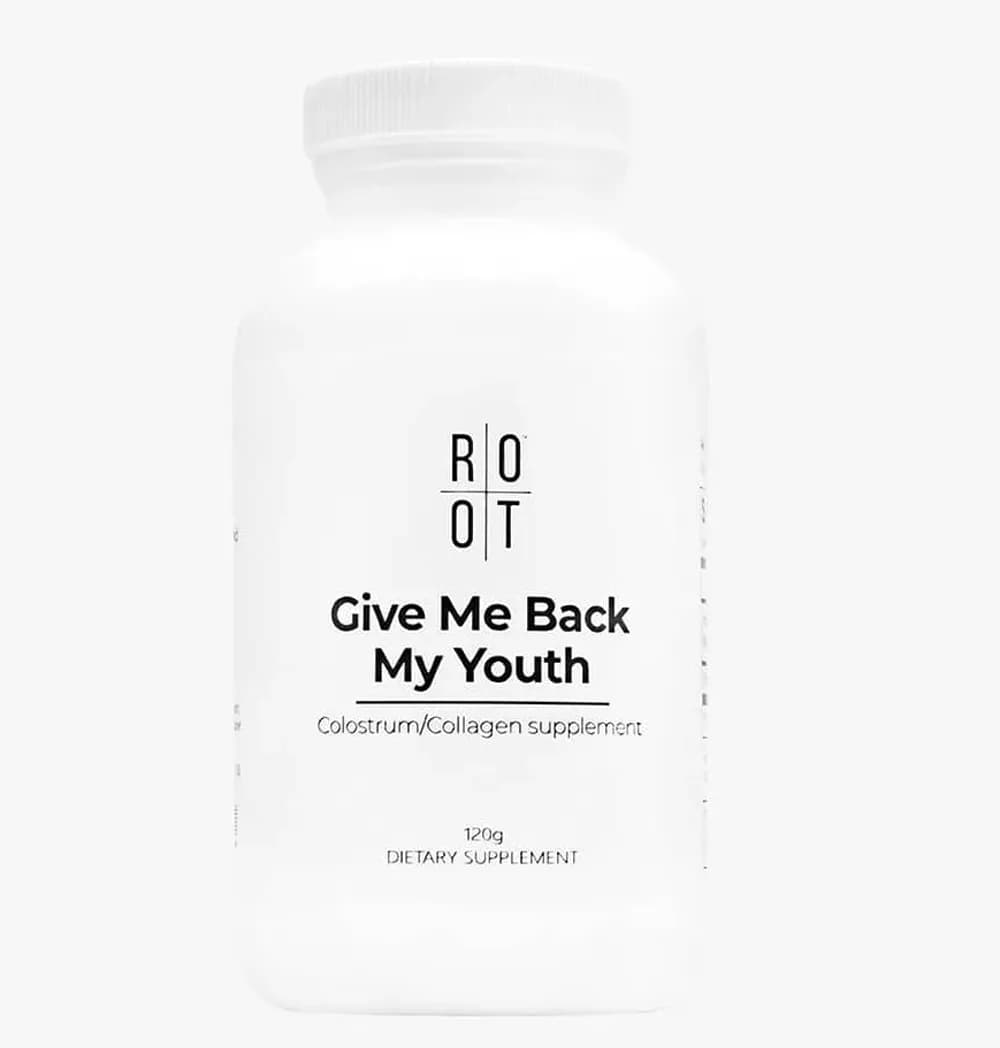
According to its label, Give Me Back My Youth (GMBMY) is a powder with no other ingredients: a 4 g serving contains 2 g hydrolyzed bovine collagen and 2 g whole colostrum powder, and a 120 g tub holds 30 servings. It contains milk. The collagen per serving sits below the upper range used in studies, so it makes sense to see it as a simple daily add-on, not your main protein source. How collagen and colostrum differ is covered in our comparison article.
What happens after you swallow it?
Your digestive system breaks collagen into amino acids and small peptides, and the body uses them where it needs them. Each gram does not go straight to a joint or your skin. Any effect takes weeks of regular use and differs from person to person.
Possible risks and cautions
- Mild digestive complaints such as nausea, bloating or an aftertaste are occasionally reported.
- If you are allergic to fish, milk, egg or beef, check the source; GMBMY contains milk.
- Supplements are not regulated like medicines, so choose a reputable maker with a clear label.
- If you take medication or have a long-term condition, check with your doctor before you start.
The bottom line: realistic expectations, steady use
Collagen peptides are not a magic fix for men. They are a complement that does not replace good food, training and sleep. When you choose one, look at the source, grams per serving and allergens. We summarise the checklist in our guide to choosing a bovine collagen supplement.
Frequently asked questions
Can men take collagen peptides?
Yes. There is no age limit for healthy adults. Collagen production declines from around the mid-twenties, so interest usually begins then. People with a medical condition should check with a doctor first.
How much collagen should men take a day?
Studies have used roughly 2.5 to 15 g a day. The safest approach is to follow the amount on the product label.
Does collagen build muscle?
Collagen alone is not the main driver of muscle growth; training, enough protein and sleep come first. One small study in older men doing resistance training reported a positive signal.
Does collagen stop hair loss?
There is not enough evidence to say so. If you notice hair loss, see a professional.
Are there side effects?
Occasionally mild nausea, bloating or an aftertaste. People with allergies should check the source, and anyone on medication should talk to a doctor.