Best Peptides for Men: Collagen, Prescription and Unapproved Peptides
We answer the best peptides for men question in three groups: collagen peptides, approved prescription peptide drugs and unapproved injectable peptides.
By Root Health TürkiyePublished Updated 5 min read
For healthy men there is no single "best peptide", because the search covers three very different groups: peptides from food and collagen supplements, prescription peptide drugs approved for specific conditions, and unapproved injectable peptides sold online as "research chemicals". Only the first group has a broadly understood safety profile, and the best-supported example for muscle and strength is collagen peptides taken alongside resistance training. Growth hormone secretagogues and substances such as BPC-157 are not approved or established as safe options for muscle, testosterone or fat loss in healthy men.
What is a peptide?
Peptides are short chains of amino acids joined by peptide bonds, usually 2 to 50 amino acids long; longer chains are called proteins. They do many jobs in the body: insulin and oxytocin are peptides, and some act as messengers between cells. Protein foods such as eggs, dairy, meat, fish and legumes are broken down into peptides and amino acids during digestion. Collagen peptides sold as supplements belong to the same family: they are collagen protein split into small pieces by enzymes. For the details, see our article on hydrolyzed collagen vs. collagen peptides.
Three different peptide worlds
1. Food and supplement peptides
Collagen peptides sit here. In a 2015 randomized, double-blind, placebo-controlled trial by Zdzieblik and colleagues, 53 older men with sarcopenia (mean age 72) did resistance training three times a week for 12 weeks. The group taking 15 g of collagen peptides a day showed larger gains in fat-free mass (+4.2 kg vs. +2.9 kg with placebo), quadriceps strength (+16.5 Nm vs. +7.3 Nm) and a larger fat-mass reduction (-5.4 kg vs. -3.5 kg). The result applies to older men with sarcopenia; it cannot be generalized directly to young, healthy men, and it does not replace training. For the possible role of collagen in men, see the benefits of collagen peptides for men, and for how to take it, how to use collagen peptides. We cover the joint side cautiously in bovine collagen peptides and joint health.
2. Approved prescription peptide drugs
Some peptide-based drugs are approved for specific diagnoses under medical supervision. Tesamorelin (Egrifta), for example, is an analog of growth hormone-releasing hormone approved in the US to reduce excess abdominal fat in HIV-associated lipodystrophy. The US Food and Drug Administration (FDA) label states that it is not indicated for weight management and that long-term cardiovascular safety has not been established. In other words, one approved peptide drug does not mean other substances in the same class build muscle or burn fat for everyone.
3. Unapproved "research" peptides
Substances such as ipamorelin, CJC-1295 and BPC-157 are often described online as "the best peptides for muscle, recovery and testosterone". In the FDA's bulk-substance reviews for compounding, concerns such as immune reactions (immunogenicity), poor characterization and limited safety data are raised for BPC-157 and CJC-1295, and ipamorelin appears in the category the FDA uses for substances that may present significant safety risks. The World Anti-Doping Agency (WADA) Prohibited List covers growth hormone-releasing peptides and non-approved substances such as BPC-157, which is a further serious risk for competitive athletes. Because adequately sized, long-term, safety-focused human studies in healthy men are lacking, we do not recommend any of these as "best".
Growth hormone, muscle and fat: a short look
Growth hormone (GH) is released by the pituitary gland, prompts the liver to make insulin-like growth factor 1 (IGF-1), and plays a role in growth, tissue repair and metabolism. That does not lead to "if I take a GH-releasing peptide, my muscle will grow": in a healthy adult the natural GH system is already regulated by feedback, and the proven routes to more muscle are resistance training, enough protein and sleep. If you suspect a deficiency or low testosterone, the diagnosis comes from blood tests and an endocrinologist or urologist, and self-experimenting with peptides can delay it.
A more realistic order of priorities for men
- Resistance training and sleep: The strongest, lowest-risk inputs for muscle and strength.
- Enough protein: To work out your needs, see how much protein you need, and for amino acid choices, choosing amino acids for muscle growth.
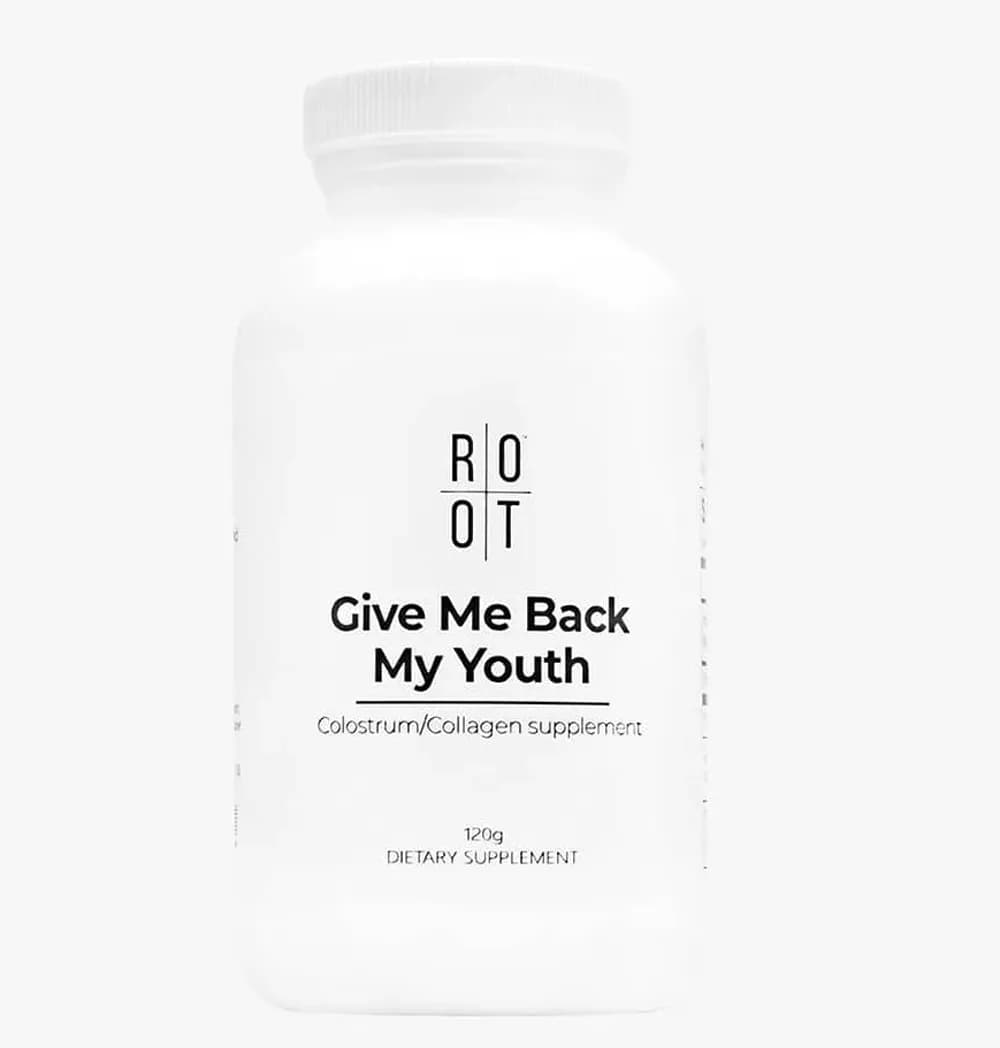
- Optional collagen peptides: Can be considered alongside training; you can find Root's collagen and colostrum product Give Me Back My Youth on our site. We do not promise muscle gain or hormone effects from it.
- Medical supervision where there is a medical reason: Prescription peptide therapy should be considered only after a doctor's assessment and for approved indications.
Questions to ask about any peptide product
- Which health authority approved this substance, and for what use?
- Were the people tested healthy men like me, or people with a specific disease?
- Is the label and manufacturer information transparent, and how are purity and sterility shown?
- If I compete in sport, is it on the anti-doping list?
- Does it make firm promises such as "raises hormones" or "melts fat"? If so, be cautious.
For a general filter when picking supplements, how to judge supplement ingredient quality may also help.
References
- Zdzieblik D, Oesser S, Baumstark MW, Gollhofer A, König D. Collagen peptide supplementation in combination with resistance training improves body composition and increases muscle strength in elderly sarcopenic men: a randomised controlled trial. Br J Nutr. 2015;114(8):1237-1245. doi.org/10.1017/S0007114515002810.
- US Food and Drug Administration: EGRIFTA (tesamorelin) prescribing information.
- US Food and Drug Administration: Certain bulk drug substances for use in compounding that may present significant safety risks.
- World Anti-Doping Agency: The Prohibited List.
Conclusion
The honest answer to "best peptides for men" depends on which peptide you mean: collagen peptides offer promising data for muscle and strength in certain groups when combined with training, approved peptide drugs are prescribed by doctors for specific diseases, and unapproved injectable peptides have no established benefit for healthy men and carry serious uncertainties. If you are worried about hormone levels, muscle loss or fat gain, see a doctor first.
Frequently asked questions
What is the best peptide for men?
There is no single best peptide for healthy men. Collagen peptides show data for muscle and strength in some groups alongside resistance training; for other peptides the evidence is limited or the substances are not approved.
Do peptides raise testosterone?
There is not enough data showing that peptides raise testosterone safely and reliably in healthy men. If you suspect low testosterone, you need a blood test and a doctor's assessment.
Are BPC-157 and ipamorelin safe?
They are not approved for healthy men. The FDA's compounding reviews raise concerns such as immune reactions and a lack of safety data.
Does collagen peptide build muscle?
One trial in older men with sarcopenia found 15 g a day alongside resistance training gave larger gains in fat-free mass and strength than placebo; it cannot be generalized to healthy young men and does not replace training.
Is there an anti-doping risk with peptides?
Yes. The WADA Prohibited List covers growth hormone-releasing peptides and non-approved substances such as BPC-157.